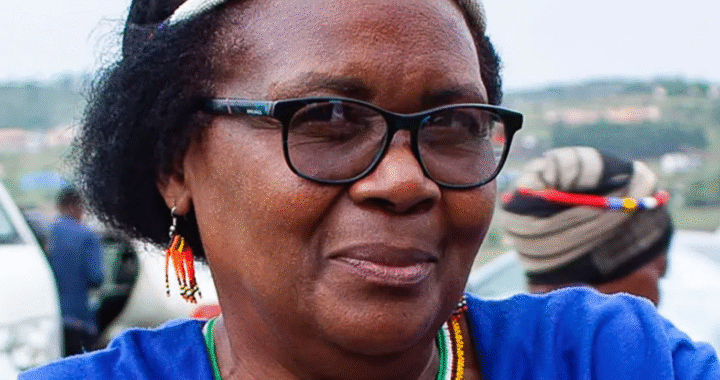
Family calls for justice for slain anti-mining activist Fikile Ntshangase
Three ‘izinkabi’ (contract killers) appear to have taken information to their graves about who paid them to murder the 63-year-old grandmother who raised her voice against the impacts of coal mining near the town of Mtubatuba, KwaZulu-Natal.
It has been five years since our client, Fikile Ntshangase, was shot dead in her home at Ophondweni on 22 October 2020, where she lived with her 13-year-old grandson.
She had refused to accept a R350,000 bribe to sign an agreement supporting the mine and withdrawing a court case, and at a meeting held before her murder, she stood up to say: “I refused to sign. I cannot sell out my people. And if need be, I will die for my people.”
Her words proved prophetic. Shortly after her statement, a group of men disrupted the meeting, one of whom repeatedly said “kuzochitheka igazi” (there will be bloodshed). A week later, she was dead.
Fikile was a member of the community organisation Mcejo, an environmental activist who challenged a coal mining expansion that has displaced and continues to displace communities near the Hluhluwe-iMfolozi Game Reserve in KwaZulu-Natal.
Five years after Fikile Ntshangase’s assassination, not a single person has been arrested for her murder. All three hitmen involved are reportedly deceased. Those who orchestrated her murder have not been caught.
Her case exemplifies the state’s failure to protect those who challenge powerful interests, the same situation we saw with Sikhosiphi Bazooka Rhadebe’s 2016 assassination in the Eastern Cape, and which has been evident in other killings since then.
The report features Fikile’s assassination as an emblematic case of the deadly risks facing environmental defenders in rural areas worldwide. In 2023 alone, 196 land and environmental defenders were killed globally, with at least 300 defenders murdered across 28 countries.
As the special rapporteur notes: “Many, like Fikile, who work in isolated, remote or rural contexts, face particular dangers.”
The report documents cases from around the world. In Peru, Quinto Inuma Alvarado, an indigenous Kichwa defender from the Amazon, was murdered in November 2023.
In Colombia, Abelardo Liz, an indigenous journalist and human rights defender, was killed by members of the armed forces while covering a land rights protest for a community radio station.
In the Philippines, environmental defenders Miguela Peniero and Rowena Dasig were arrested while conducting research on the impact of a planned gas turbine power project on coastal communities and local biodiversity.
The UN special rapporteur specifically highlighted All Rise Attorneys in her report as a women-led legal centre based in KwaZulu-Natal working with directly affected communities, including the Mfolozi community in litigation against the Somkhele coal mine expansion.
Despite the special rapporteur raising Fikile’s killing with the South African government multiple times since 2020, there has been no satisfactory response.
At the 18th meeting of the Human Rights Council in Geneva on 10 March 2025, the South African Human Rights Council representative responded to questions about Fikile’s case by stating her killing “is currently being investigated” and that “the perpetrators will face the full might of the law”.
However, in response to a pending request that the case be transferred to the Directorate for Priority Crime Investigation (Hawks), All Rise was recently informed that because all the hitmen were allegedly dead, there was no point in continuing the investigation.
However, I believe that until such time as those who arranged and commissioned this assassination are identified and brought to justice, this case cannot be closed, and the investigation must continue.
The UN special rapporteur’s report notes that South Africa has yet to respond to her communications about Fikile’s case. This silence raises questions about the priority South Africa places on protecting human rights defenders and investigating attacks against them.
Litigation tactics create barriers to justice
The expression “justice delayed is justice denied” is not only applicable in the criminal justice system. It is also relevant in the context of environmental litigation, where delays purposefully orchestrated by respondents and their attorneys can have devastating consequences for vulnerable communities.
As someone who has represented coal-mining-affected communities for more than a decade, I have observed how litigation strategies centred on delays create profound challenges for both communities seeking justice and the pro bono lawyers who serve them.
Litigation is characterised by extended procedural battles that, in my experience, often overshadow substantive legal issues. In mining and environmental matters, while communities suffer immediate and ongoing harm — children developing respiratory illnesses from coal dust, homes cracking from blasting, water sources becoming contaminated, people relocated off their land without proper compensation — court processes can stretch for years through various procedural battles.
I have witnessed a pattern where applications for extensions well beyond statutory deadlines become routine and where voluminous, poorly organised court papers are filed, requiring extensive time to analyse, often with critical annexures missing and requiring repeated requests for copies or clarification.
Rule 7 applications challenging attorney-client relationships are filed at crucial junctures, only to be withdrawn just before hearings. Each individual action may appear reasonable within the bounds of zealous advocacy, yet collectively they create a systematic barrier to accessing justice.
The state’s role in these delays presents its own challenges. Government departments routinely struggle to file papers timeously, if at all; provide incomplete Rule 53 records; and fail to respond to court deadlines.
When State attorneys do eventually file papers, they often do it in a piecemeal fashion and in a state of disarray. This creates a situation where legal challenges can languish for years while mining operations, community impacts and environmental destruction continue.
The human cost
For rural communities living adjacent to extractive industries, every month of delay translates into continued exposure to environmental and health risks.
I have sat with elderly women describing respiratory problems from coal dust, and the fear their grandchildren experience from blasting.
Fikile was murdered. Gideon Gumede, another one of our clients, died from an unexplained lung disease. While people die, their homes crack and dust pollutes their water sources, legal proceedings that could address these issues remain bogged down in protracted legal strategy and delay.
The psychological impact extends beyond physical harm. Community members invest tremendous hope in legal processes, particularly given South Africa’s constitutional promise of environmental rights and access to justice.
When these processes stretch endlessly while mining operations expand around their homes, the resulting disillusionment can be profound. Some community members lose faith in the justice system. Some die while waiting. Others, facing mounting pressure, intimidation and sometimes violence, abandon the legal challenges altogether.
This dynamic raises uncomfortable questions about whether our legal system is fulfilling its constitutional mandate to provide accessible justice, particularly for those who cannot afford private representation.
The challenge for pro bono practice
These extended proceedings place particular strain on pro bono legal practices. Unlike large corporate law firms with substantial resources, pro bono practitioners, often small firms or NGOs operating on limited budgets, struggle to absorb the costs of protracted litigation.
Each delay or failure to comply with deadlines requires additional travel to rural communities for client consultations, repeated preparation for hearings that are postponed, and mounting administrative costs. Time spent managing respondents’ adherence to court-imposed timelines is time that is denied to other equally deserving cases.
I have experienced the frustration of preparing extensively for court dates, travelling for hours to remote venues, only to have matters delayed because of last-minute interlocutory applications or the defendant filing thousands of pages for what should be a simple affidavit.
While corporate law firms representing mining companies can deploy teams to manage these complexities, small pro bono practices must often handle multiple roles with limited resources.
This creates an inherent and unjust imbalance. Well-resourced defendants can afford to pursue delay strategies knowing that pro bono lawyers face mounting pressure to settle on unfavourable terms, and withdraw from cases entirely, resulting in moot cases.
The result is a system where the strategy of delay and overburdening sometimes matters more than legal merit. This is aside from the emotional toll of watching clients suffer while the legal system and justice fail them.
Professional and ethical considerations
These dynamics raise important questions about professional responsibility within our legal system. While zealous advocacy is fundamental to legal practice, there exists a distinction between legitimate tactical considerations and strategies that appear designed primarily to exhaust opponents’ resources, rather than advance substantive legal arguments.
It is important to acknowledge that many of these litigation tactics are commonplace in standard commercial litigation between well-resourced parties.
However, these same strategies become completely unethical and unreasonable when deployed against indigent communities and pro bono lawyers who lack the resources to respond in kind. The power imbalance transforms what might be acceptable tactical manoeuvring in corporate disputes into a mechanism for denying access to justice.
For attorneys representing corporations in environmental matters, the challenge lies in balancing client advocacy with broader considerations of justice and constitutional rights.
When litigation strategies result in continued environmental harm to vulnerable communities while legal processes are delayed, questions arise about whether such approaches align with the profession’s broader duties.
Toward better practice
Addressing these challenges requires thoughtful consideration from multiple stakeholders. Courts could benefit from enhanced case management approaches that consider the relative resources of parties and the ongoing harm to affected communities. Adhering to court rules and enforcing consequences for missing deadlines might help ensure that procedural rules serve their intended purpose of facilitating fair resolution rather than enabling endless delay.
The legal profession itself has a role to play in examining whether current practices serve the broader goals of justice and constitutional democracy. Professional development and ethical guidance could help lawyers navigate the tension between zealous advocacy and procedural fairness, particularly in matters involving vulnerable communities.
Looking forward
These issues ultimately reflect broader questions about access to justice in South Africa. Our Constitution promises environmental rights and equal access to courts, but procedural barriers can make these rights illusory for those who most need protection.
Environmental litigation often involves society’s most vulnerable members — rural communities, traditional groups, and economically marginalised families. When our legal system struggles to provide timely resolution of their legitimate claims, we risk undermining the constitutional vision of justice that should guide our democracy.
The solution lies not in eliminating procedural protections, which serve important fairness functions, but in ensuring they operate as intended. This requires ongoing reflection from legal practitioners, improved case management from courts, and recognition that in environmental law, delay is not merely strategic and procedural; it can cause irreversible harm to both communities and ecosystems.
As legal professionals, we have the opportunity to use our skills in ways that advance the constitutional values of dignity, equality and environmental protection.
How we choose to exercise that opportunity, whether in corporate boardrooms, government departments or rural communities, will ultimately determine whether our legal system serves justice or impedes it.
Today, we remember Fikile and what she died for. We push for the police to find out who orchestrated her death and ensure justice is served. And our work that Fikile put her faith in to deliver justice continues.
Justice delayed is indeed justice denied, and in environmental law, it may mean the difference between saving lives and preserving communities, or allowing their destruction while legal processes unfold at a pace that serves everyone except those most in need of protection.
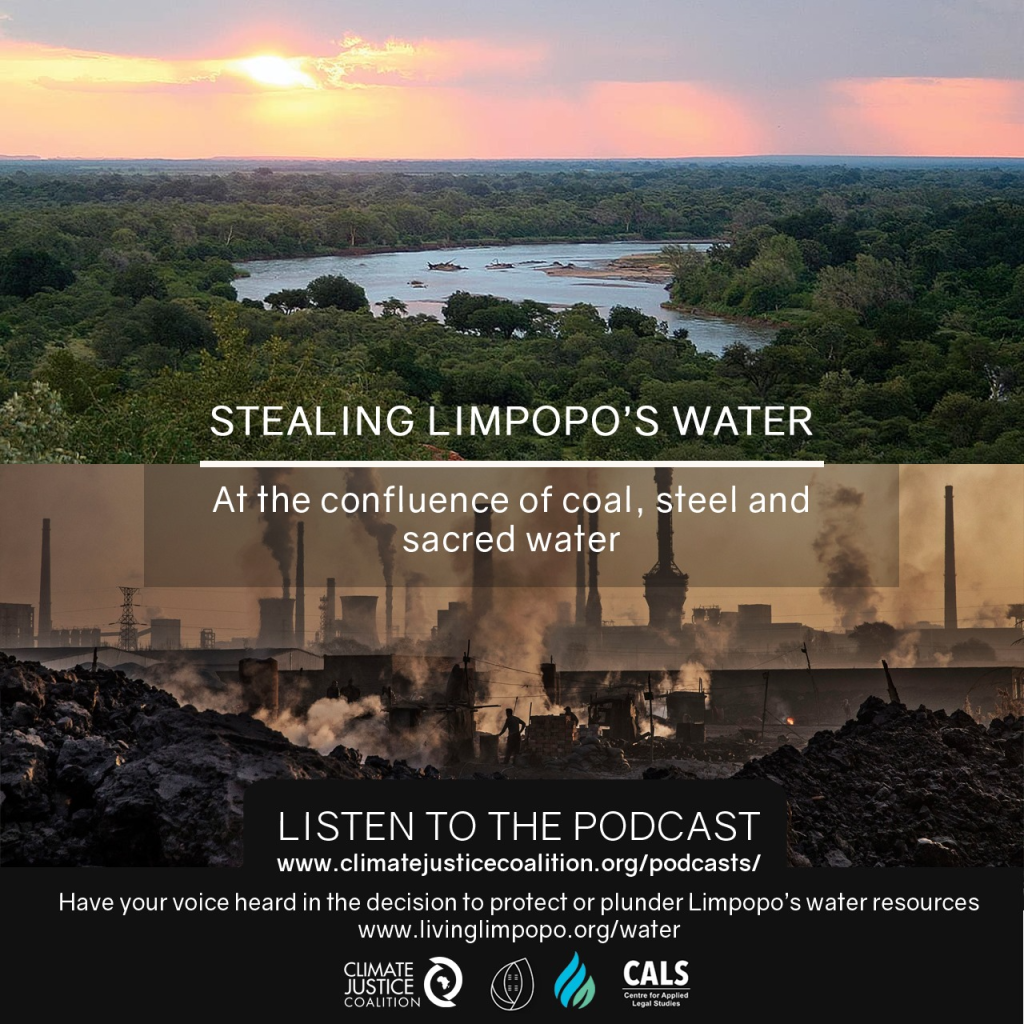
Metal smelter studies misread Limpopo air pollution impacts by up to 87.5%
Plans for a massive China-South Africa metal smelting project in Limpopo have run into fresh controversy after consultants grossly underestimated the air pollution and climate change impacts of the first proposed ferrochrome factory.
On 2 June 2025, the Mfolozi Community Environmental Justice Organisation (MCEJO) together with the Global Environmental Trust (GET), Mining Affected Communities United in Action (MACUA), ActionAid South Africa, (ActionAidSA), and the Southern Africa Human Rights Defenders Network (SAHRDN) obtained a court order from the Pietermaritzburg High Court setting out the agreed deadlines by which Tendele Coal Mining (Pty) Ltd and the other opposing respondents must file their answering papers.
This has been an uphill battle since 18 March 2025, when Part B papers were served on the respondents. As per the Rules of Court, answering affidavits were due on 29 April, but Tendele requested an additional two months to submit.
The Mpukunyoni Business Association (MBA), a company registered in May 2025 and which advised of its intention to intervene in the matter in April 2025, was represented in court to submit intervention papers.
The parties agreed to the inclusion of the MBA and timeframes by which to file further papers. The timeframes were made an Order of Court, which will, hopefully, prevent more delays. Leave to approach the Judge President for an expedited hearing was also granted.
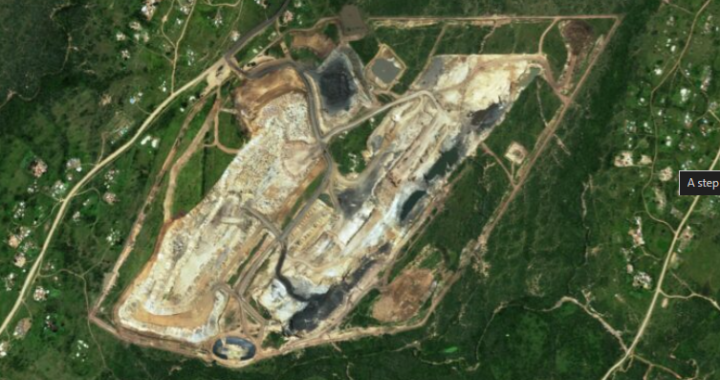
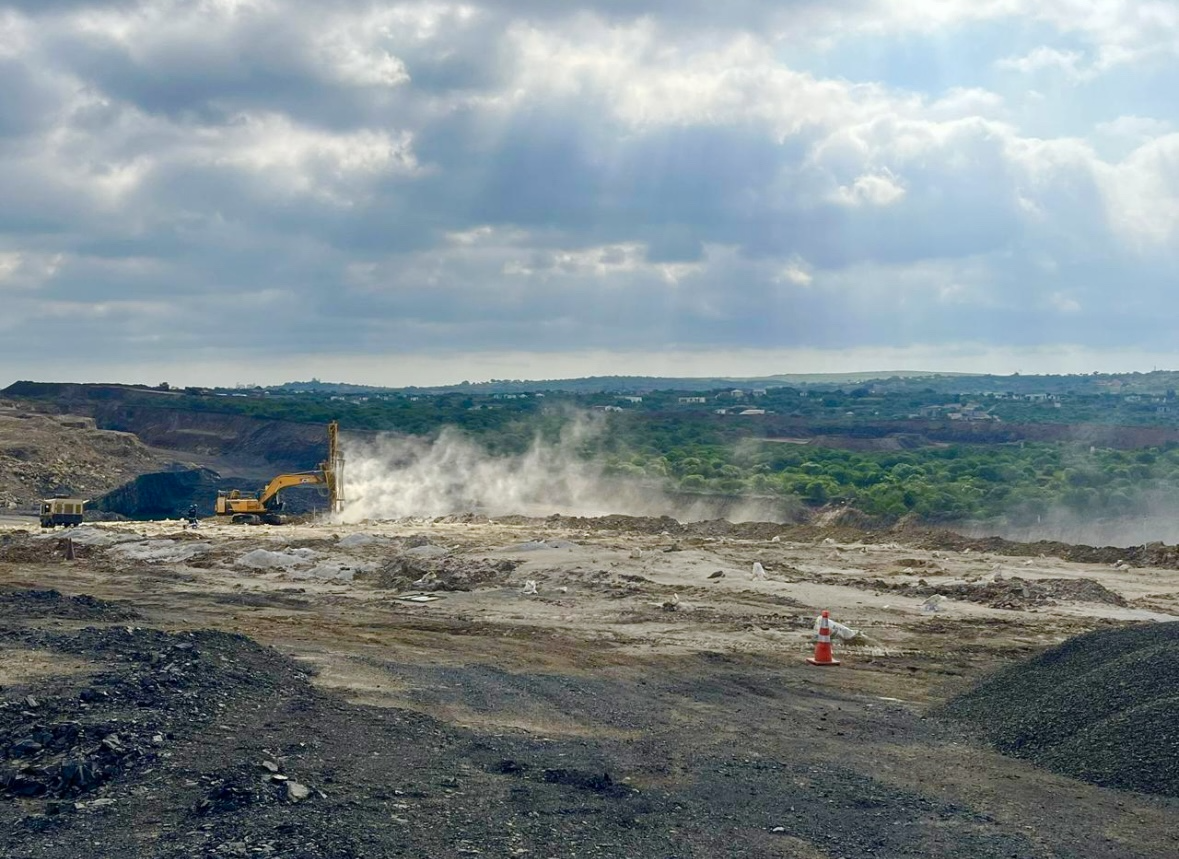
In the meantime, Tendele continues its mining operations to the severe detriment of the residents of Emalahleni village. Satellite imagery (https://drive.google.com/file/d/1a5Y7pw3tUwOg8jRBOqkwgtcw21nTTI8o/view?usp=drive_link ) dated 25 March 2025 shows the massive environmental destruction in the area, with activities having now commenced in the village of Ophondweni. Tendele continues with weekly blasting, even though families are living within 500 meters of the blasting zone. The failure to resettle these families places them at continued risk and violates both legal and ethical obligations.
MCEJO and the other non-profit organisations are pursuing Part B of their court application to interdict Tendele from continuing mining in three new villages in northern KwaZulu-Natal until it has complied with a judgment handed down in May 2022. See previous press release here: https://drive.google.com/file/d/16qMxynFN23lu27Puq9AIn9ygLLyB46OH/view?usp=drive_link
“The delays orchestrated by Tendele and other respondents while our clients suffer daily are an abuse of the legal system. As frustrating as it is to have to approach court for orders such as this one, we hope that this will ensure these dates will be complied with and we will be given an expedited hearing. We are one step closer to justice, which has been a long time coming.”
Coal hunters circle Africa’s first wilderness and rhino sanctuary
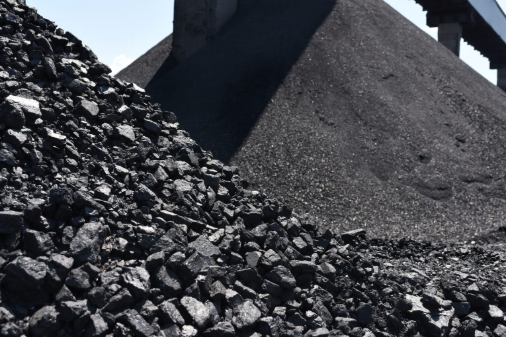
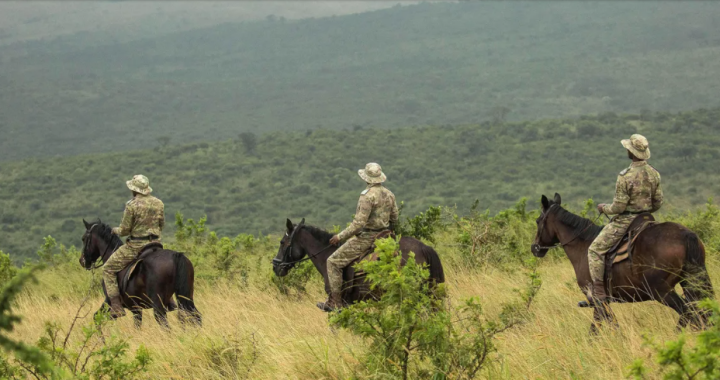
The mineral commodities market is tightening its noose around one of Africa’s oldest game reserves, with a renewed flurry of coal, gas and mineral prospecting applications on the park’s boundaries.
All Rise had a busy year full of challenges, new partnerships, presentations and lawyering!
New Faces at All Rise
Candidate Attorney
In August 2024, we welcomed our first Candidate Attorney, Kaliope Geldenhuys, a postgraduate law student from UKZN. Since 2021, Kali has volunteered at All Rise during her holidays, helping us and, in the process, learning that environmental law is her passion. We are fortunate that Kali is now a full-time member of the team and are thrilled to welcome another woman to All Rise.
Columbia Law School Human Rights Internship Program
Through the Columbia Law School Human Rights Internship program in the United States, Lena Swirczek joined us as an intern for 10 weeks. This was Lena’s first time to South Africa, and her contribution, though short, was invaluable. It was enlightening to have a young person with an international perspective to contribute to All Rise’s work. We now have an established partnership with Columbia Law School and will welcome more interns in 2025 and beyond.
Hosting Nikki Walsh
Nikki Walsh is a criminal defence lawyer turned law professor at London City Law School from the UK. Nikki reached out to All Rise in August 2024 when she was in South Africa. She had been following All Rise’s work for some time and wanted to get insight into climate justice law. During her time with us, Nikki offered meaningful insights into her take on the climate justice sector in South Africa. It was a delight to have such a lovely person and experienced lawyer work with All Rise, albeit for a short time.
Collaborations
MPRDA Coalition- MACUA
All Rise joined MACUA’s MPRDA (Mineral and Petroleum Resources Development Act) Coalition, calling on Parliament and the DMRE to amend the MPRDA in accordance with the right to free, prior, and informed consent for communities and to legalise artisanal mining.
Submissions were made to Parliament, which included proposed amendments in the areas of resettlement and relocation, free, prior and informed consent, and climate and environment.
This collaborative work will continue in 2025.
Black Girls Rising
We are thrilled to announce the graduation of the three ambassadors who were selected from the Ishoweni area through their collaboration with the Mpungose Traditional Authority and Black Girls Rising (detailed in our 2023 newsletter here).
These ambassadors graduated mid-year in 2024 and were given the opportunity to fly to Cape Town to attend a wilderness leadership camp. We are excited to see how these ambassadors grow and thrive through all the learning opportunities, mentorship and tools they were given through the programme.
Workshops, Presentations & Events
Environmental Assessment Practitioners Association of South Africa (EAPASA) Conference
Janice presented on “A Rights Based Approach to Environmental Impact Assessment (EIA) – vulnerable and disadvantaged persons.” This presentation explores how and why vulnerable and disadvantaged communities are often not meaningfully consulted during the EIA process and how this can be remedied. A rights-based approach to EIAs is a framework that integrates human rights principles into the environmental decision-making process, ensuring that all stakeholders – especially marginalised communities – have the right to participate in, gain access to information about, and seek justice regarding environmental impacts.
Endangered Wildlife Trust (EWT) Laws Website Webinar Series
Kirsten and Janice were invited by EWT to contribute to their webinar series on laws relating to the environment. Two webinars were given, the first on “Intergenerational Equity: Exploring Environmental Justice” and the second on “Introduction to EIAs.” These will be uploaded onto the EWT Laws website.
ELCA Southern Africa’s Convening
Janice was invited to participate in and present at the Environmental Lawyers Collective for Africa (ELCA) Southern Africa’s Convening. The purpose of the convening was to provide a space for information sharing and learning between public interest lawyers throughout the SADC region, particularly in climate and environmental justice.
State Capture and Beyond Campaign
Kaliope attended the State Capture and Beyond Multistakeholder Meeting in Durban created in collaboration with the Legal Resources Centre (LRC), Human Rights Media Trust, & Brot für de Welt. The theme of the campaign in Durban focused on how corruption makes citizens more vulnerable to climate change. To find out more: https://beyondstatecapture.org.za/
Alumni meeting – Rights and Remedies – a course for activists
Lihle attended an alumni meeting of the CER’s “Rights and Remedies, a course for activists” course to make meaningful contributions to future attendees.
Land Workshop with Sthembiso Gumbi
We invited Sthembiso Gumbi to speak at a workshop on land rights. This was held in KZN for one of our community organisation clients and, as usual, the presentation was informative and well received.
Opposing Unsustainable Projects on Behalf of Community Organisations and NGOs
Tendele’s Somkhele Coal Mine
Review of Tendele’s 2016 Mining Right and court-ordered EIA process
It has been nearly three years since Bam J’s judgment and Tendele still has not finalised the EIA process and submitted its report to the Minister of DMRE to decide the remitted appeal. In our interdict application brought in 2023, Koen J ordered that Tendele could undertake limited mining activities before the appeal was prosecuted. This was under the presumption that Tendele would adhere to all the promises made and timelines given in its commencement notice and court papers. This included not blasting until all the families within the 500 m blast radius had been relocated. Blasting began in September despite many families still living within the 500m zone.
Tendele distributed its draft EIA report for I&AP comment in May 2024, the deadline for which was mid-July 2024. It has made no visible progress since then, nor has the final EIA report been finalised and submitted to the Minister. Tendele, however, commenced work at Emalahleni in May 2024 and is actively mining 24 hours a day, 6 days a week.
The public participation process done in an attempt to comply with the Order of Judge Bam, is once again flawed:
Families who still need to be relocated from Emalahleni and Ophondweni are receiving assistance from All Rise and Lawyers for Human Rights (LHR). Their relocation should have been completed before Tendele started its mining activities as per the undertakings it gave in court. Failing to keep to its word, these families, especially at Emalahleni where active mining is taking place, are being subjected to continuous blasting, dust, noise, heavy coal trucks, and other mine traffic. Another travesty of justice plays out.
South African Human Rights Commission (SAHRC)
In 2022, All Rise reached out to the SAHRC to investigate the human rights violations of our clients from the violence and intimidation experienced by MCEJO members due to their protests against the mine’s unlawful actions within their communities. The SAHRC undertook to investigate these human rights violations, and although the process has taken a long time, we have been promised a report on its findings in February 2025.
Jindal’s Iron Ore Mine
In early February 2024, we received the good news that the application for environmental authorisation for the proposed Jindal Melmoth Iron Ore Project in the Mthonjaneni Local Municipality in KwaZulu-Natal had been refused based on the significant gaps in the EIA reports.
In August 2024, All Rise submitted comments on the new Scoping Report outlining its many shortcomings, especially the lack of detail and information on the impacts on the surrounding community and environment, as well as the deficient public participation process. In late 2024, the DMRE rejected the scoping report, and directed Jindal to redo Scoping. The draft Scoping Report was released again for public comment at the end of January.
If this project is authorised, it will destroy vast areas of natural vegetation and commercial and small-scale farming land, and require significant volumes of water, impacting on biodiversity, water resources, food security, jobs and the regional formal and informal economy. We will continue to oppose it on behalf of our clients, most of whom will be directly affected.
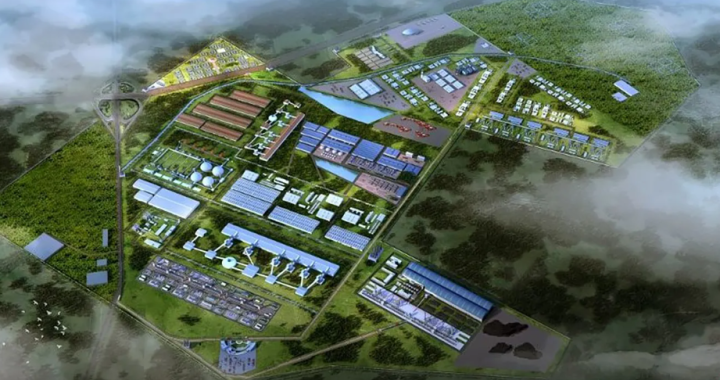
Musina-Makhado Special Economic Zone (MMSEZ) in Limpopo
The opposition to the MMSEZ in the Vhembe District of Limpopo Province continues on behalf of our clients, Living Limpopo, The Herd Reserve and CALS. Aside from the ongoing court review of the provincial government’s decision to grant environmental authorisation to clear 3500 hectares of indigenous bush, All Rise has also objected to the township application for the Mega City and the water use license application, as well as investigated applications made for the destruction of over 600 000 protected trees.
Overall, the MMSEZ and the various coal mining projects surrounding it are so fundamentally flawed that they must be challenged on many levels and in many areas.
Thank you
We would find it extremely hard to do our work without the support of so many people and organisations that offer financial support, pro bono and “low bono” professional assistance and advice, volunteers, interns, and colleagues. We are so grateful to you all, but special mention goes to:
The Ford Foundation, EDLC, Global Green Grants Fund, Natural Justice, Legal Aid South Africa, SDCEA, SAHRDN, GET, MACUA, ActionAid SA, CALS, Our Children’s Earth Foundation and individual donors.
Our board of dynamic women – Mawande Mazibuko, Renee Kirkham, Trudie Nichols, and Dineo Skosana.
Advocates Anna-Marie de Vos, Mawande Mazibuko, Sarah Pudifin-Jones, Jatheen Bima, Letlhogonolo Mokgoroane and Emma Webber.
Adriaan Oosthuizen, Alice Harvey, Mohamed Kajee, Nicola Gerrard, Janelle Barnard, Sthembiso Gumbi, Adam Bennett, Sarah Bracking, Patrick Bond, Gwendolyn Wellmann, Mary de Haas, Sheila Berry, Arnold Tsunga, Lauren Liebenburg, Simphiwe Sidu, Rob Symons, Linda Tucker and Saskia von Diest.
Mary Lawlor, UN Special Rapporteur for Human Rights Defenders
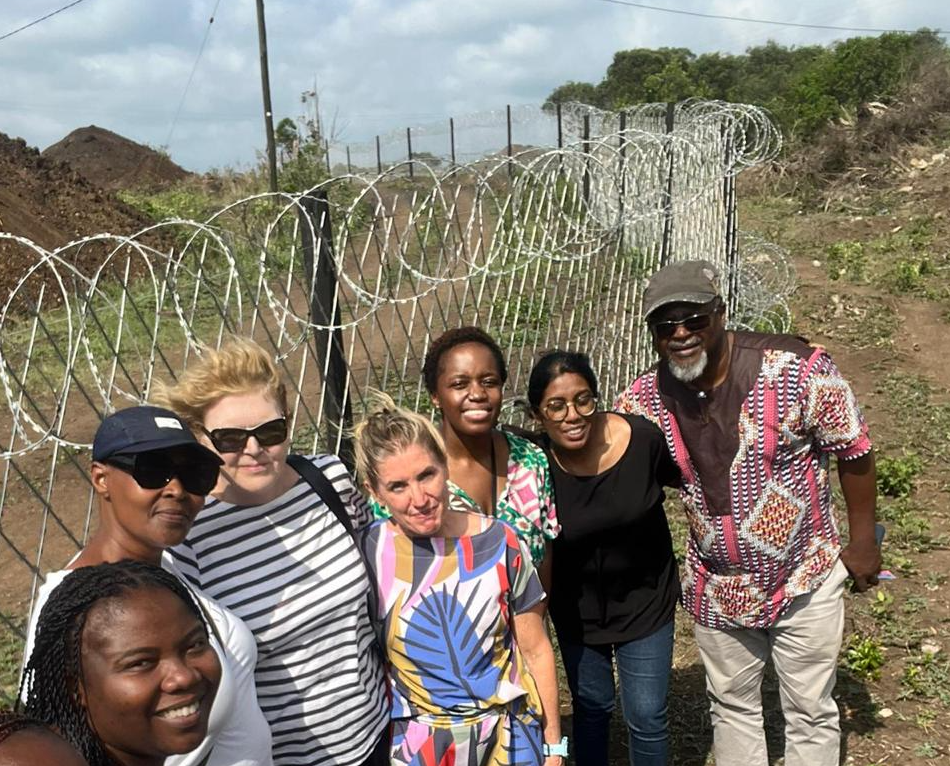
Towards the end of last year, the African Initiative of Women Human Rights Defenders facilitated an academic visit to South Africa for Ms. Mary Lawlor, the UN Special Rapporteur on the Situation of Human Rights Defenders. This included a visit with All Rise and our clients. The Special Rapporteur and the WHRD Initiative joined us in Somkhele to meet members from MCEJO who bravely spoke out about the injustices of the Tendele coal mine. Thank you to the Special Rapporteur for your continued support of our clients and our work.
Ending Off
After a challenging 2024, we welcome 2025 with the words of the late Wangari Maathai, who championed the creation of the Kenyan Green Belt and was the first African woman to receive the Nobel Peace Prize:
“There are opportunities even in the most difficult moments.” ― Wangari Maathai, Unbowed
Kirsten, Janice, Lihle and Kali
**As a non-profit clinic, we need funding to do our work. If you would like to support us, we would be very grateful! Head to this link to donate **
We use cookies to ensure that we give you the best experience on our website. If you continue to use this site we will assume that you are happy with it.