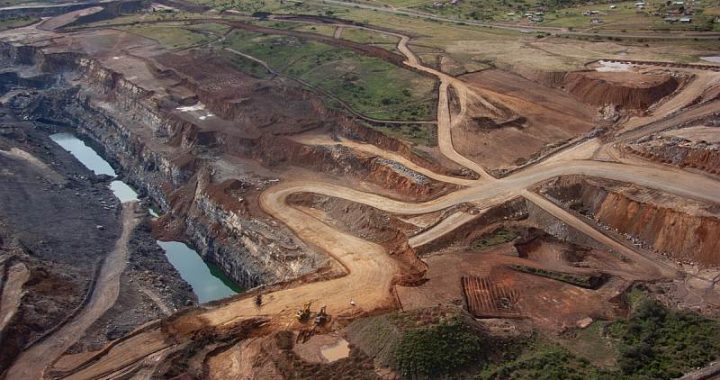
Dates confirmed for Review Application

Good news: Deputy Judge President Ledwaba has confirmed that our Review application will be heard on 10, 11 and 12 NOVEMBER 2021. Parties are working hard at trying to limit the issues in dispute (which will also limit the reading of the 8000 page record) and have been instructed to file a revised Joint Practice Note by 5 November.

Nearly three years after the application was first instituted in the Pretoria High Court to review and set aside Tendele’s Mining Right, and several postponements later, the court hearing set down for 6 and 7 October had again been postponed.

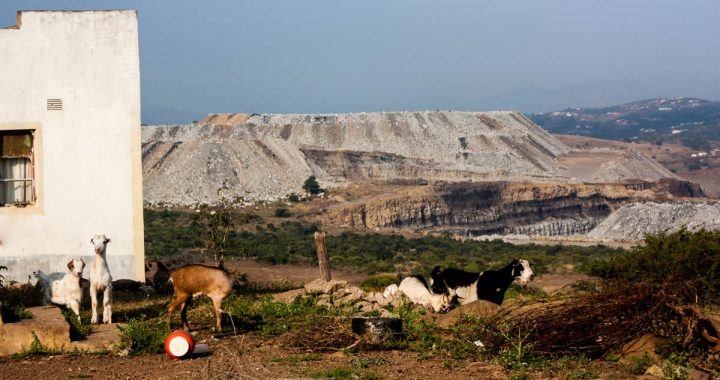
The court application was brought by the Mfolozi Community Environmental Justice Organisation (MCEJO) and four co-applicants, GET, MACUA, SAHRDN and ActionAid SA against the decision made in 2016 granting Tendele Coal Mining (Pty) Ltd a new mining right in Somkhele, an area falling between Mtubatuba and Hluhluwe-iMfolozi Park, in north-eastern KwaZulu-Natal. This mining right allows Tendele to significantly extend its mining operations into three new areas displacing thousands more people in addition to those already affected by its existing mining operations that commenced in 2007.

Please read:

Somkhele project fact sheet

Previous post “ANOTHER DELAY TO MCEJO’S COURT CHALLENGE OF TENDELE’S SOMKHELE MINING RIGHT”

Daily Maverick article by Tony Carnie (7 October 2021)

Press Release: 18 October 2021

Call for justice for environmental defender – Fikile Ntshangase – a year after her murder in South Africa.

On October 22nd last year, Fikile Ntshangase was at home with her grandson Buyile in Ophondweni, Kwazulu-Natal province, South Africa. Three unknown men arrived and shot her dead in her living room.

Fikile was a mother and grandmother, a campaigner, and a leader, who had been opposing the extension of Tendele Coal mine in Northern KZN. Friday the 22nd will mark one year since her brazen and brutal assassination. No arrests have been made.

“We will always remember Fikile courageously standing up against Tendele coal mine’s expansion and voicing the truth. She is gone but her legacy and fight continue.” Kirsten Youens, Attorney, Executive Director, ALL RISE.  

We are in the midst of a climate crisis. The South African government has a duty to protect environmental defenders and the crucial work they do in protecting the natural world. Disturbingly, they’ve been silent on Fikile Ntshangase’s murder and the daily dangers faced by other defenders.

The problem extends far beyond South Africa. Last year, Fikile was one of 227 people around the world who lost their lives in 2020 defending their homes, their land and livelihoods, and the ecosystems we all depend on. Environmental defenders have the right to be protected, the right to protest  and the right to justice and accountability. Yet we see time and time again that their rights are ignored in favour of corporate interests and industry.

On Friday October 22nd , and Saturday October 23rd, colleagues and members of the public will join Fikile’s family and the Mfolozi Community Environmental Justice Organisation (the community organization that Fikile was part of), in a day of action and a day of remembrance. 

“This week takes me back to a time that I would give anything to forget. I miss my mom, my hero and my rock. I pray for justice and peace. I pray for her legacy to live on and that her spirit awakes in us all!” Malungelo Xhakaza, daughter of Fikile Ntshangase. 

All Rise and their partners urge South Africa’s parliament and government take active steps to investigate the unsolved murders of Fikile and others who lost their lives – and that other governments across the globe follow suit.

Please join the movement and the march this week in celebrating the lives of defenders like Fikile and demanding justice on the hashtag: #DefendtheDefenders & #JusticeforFikile. 

To join the march, visit this link for more information: https://allrise.org.za/we-demand-justice/ 

Please find photography, graphics and information on Fikile at the links below:

ENDS:

More information: 

ALL RISE is a non-profit company, public benefit organisation and registered law clinic with an all women board of directors (executive and non-executive). We are the only pro bono attorneys in KwaZulu-Natal, South Africa, working exclusively in the environmental field and one of a few in the country. We assist communities and organisations to assert their Constitutional right to an environment that is not harmful to their health or well-being. https://allrise.org.za/

Global Witness works to hold companies and governments to account for their destruction of the environment, their disregard for the planet and their failure to protect human rights.  https://www.globalwitness.org/en/

Unforgettable Fikile

Fikile Ntshangase – photo by Rob Symons

By Sheila Berry

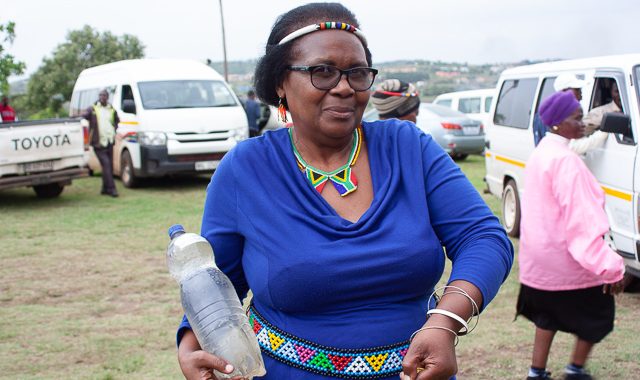
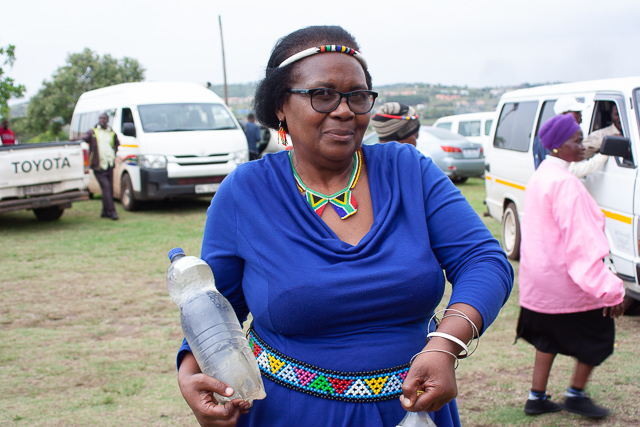
Mam Fikile Ntshangase was a shero who paid with her life for her strong belief in justice and integrity. It took 6 bullets from a hired assassin’s gun to silence this 63-year-old woman who unflinchingly spoke out against corruption, illegal actions and acts of betrayal. 

Fikile’s name means “arrived” in Zulu and sums her up very well. When she arrived at meetings her presence was manifest. She dressed elegantly and sat in the front rows. She engaged actively in what was being presented and was not afraid to express what was on her mind.  She was meticulous about gathering information and armed with the facts, she was fearless in speaking truth to power. She challenged ministers, high-ranking officials, and traditional leaders and would call them to account. 

Fikile’s activism started in high school, where she was involved in community service to counter the injustices and inequality of the apartheid regime. 

As a young woman, she was active in politics but unencumbered by party politics. She aligned herself with those who shared her views and values more than with a political party, especially one that was failing the very people it was created to serve.  Her objective was to change the repressive and unjust society she grew up in and not about seeking personal power.  She wanted people to experience freedom and justice, and to know their rights and fight for them, especially their constitutional and land rights. She even named her daughter Malungelo, which means “rights” in Zulu.  

Things also had to be done right.  Fikile spoke out strongly when things were done in an unacceptable way or did not follow the required protocols. She was relentless when she came across an irregularity and would raise the issue at every opportunity until she was heard. She saw it as her civic duty to expose what was wrong and unacceptable, and to educate people about the right way to do things.  She had been a teacher and would not accept the idea that if you lived in a rural community you were uninformed. 

Fikile valued and appreciated herself as a woman and encouraged young women to respect themselves and be aware of the important contribution women made to the world. She was a mother, grandmother, and a pillar of the Ophondweni community. Her home was always open. She never turned anyone away who came to her in need. She was also a loving wife and enjoyed a very happy marriage with her late husband who fully supported and respected her and her work. 

The Global Environmental Trust and All Rise are honoured to have worked closely with Mam Fikile and support all efforts to share her rich and instructive story. As a committed teacher, Fikile would have appreciated any helpful learnings that emerge from her life …. and her death. 

This article was also published in saveourwilderness.org

Tribute to Baba Ndlanzi

Baba Ndlanzi

By Sheila Berry

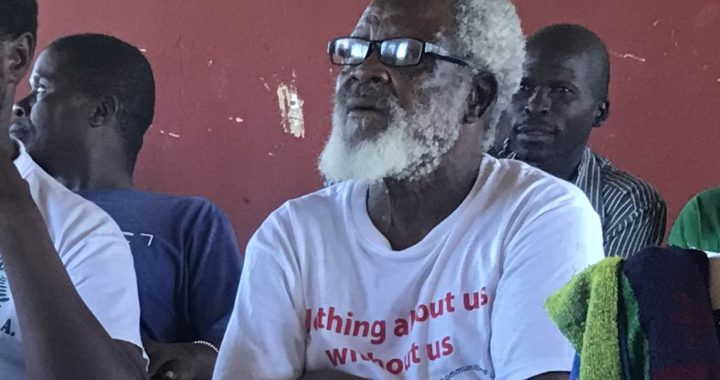
GET, MCEJO and All Rise wish to pay belated tribute to our much-loved Baba Makwela Canaka Ndlanzi, who died on 27 August 2021. Mr Ndlanzi was a loyal member of the Mfolozi Community Environmental Justice Organisation (MCEJO) who regularly attended our community meetings. We offer our condolences to the family and trust that his soul rests in peace. We miss his presence and his warm friendly smile that his white beard could not hide.

The Ndlanzi family was amongst the first to be relocated when coal mining came to Somkhele with wonderful promises of how everyone would benefit from the wealth and job opportunities that mining would bring to the area. In those early days, before the truth about the unbearable impacts of coal mining became a reality, it was not difficult to persuade residents to give up their land. 

Mr Ndlanzi’s sad story is a common one in Somkhele and wherever mines relocate rural farmers. At a recent meeting earlier this year, where MCEJO members were asked to share their grievances in order to inform the pending mediation process with Tendele mine, Baba Ndlanzi was one of many who spoke.  He told about his big farm at Dubelenkunzi and how it included an extensive area under sugarcane. Every year this piece of land would produce annual profits of R200 000 or more. When the mine was negotiating the family’s relocation, it promised to pay compensation of R200 000 a year for the loss of this field. However, when the Ndlanzis were relocated the mine paid only R100 000 for the first year and thereafter nothing was paid to them. For almost 20 years Mr Ndlanzi struggled to make a living after having been a wealthy farmer. He warned others not to be tricked by Tendele’s false promises or think that the money paid to them by the mine would make them wealthy. When it came to dealing with the mine, the mine would always win, and the people would always lose. 

It is sad that Mr Ndlanzi did not live to witness the inevitable transition to economic, social, and environmental justice that MCEJO, All Rise and GET are committed to achieving. The High Court hearing on 6 and 7 October to review Tendele’s 222km2 mining right is an important step along this road. (Please see the update on the hearing)

This article was also published in saveourwilderness.org

ANOTHER DELAY TO MCEJO’S COURT CHALLENGE OF TENDELE’S SOMKHELE MINING RIGHT

Photo by Rob Symons

A court application has been brought by the Mfolozi Community Environmental Justice Organisation (MCEJO) and it four co-applicants, GET, MACUA, SAHRDN and ActionAid SA against the decision made in 2016 by the Minister of Mineral Resources granting Tendele Coal Mining (Pty) Ltd a new mining right in Somkhele, an area falling between Mtubatuba and Hluhluwe-iMfolozi Park, in north-eastern KwaZulu Natal. This new right allows Tendele to significantly extend its mining operations into three new areas displacing thousands more people in addition to those already affected by its existing mining operations that commenced in 2007.

Nearly three years after the application was first instituted in the Pretoria High Court to review and set aside Tendele’s Mining Right, and several postponements later, yesterday’s court hearing set down for 6 and 7 October was again postponed. 

This was the ruling of the Honourable Acting Judge Bam after she said that the parties had failed to file a Joint Practice Note setting out the facts that are common cause (i.e. the facts to which all parties agree) and those that are in dispute and remain to be argued before and decided by the court. 

Although the parties then proceeded to combine their respective practice notes into one, Acting Judge Bam said that it was evident that there was a lot of additional reading required and that the court hearing could not proceed. The applicants’ attorneys, All Rise have requested an urgent case management meeting with the Deputy Judge President to request new dates still before the end of this year and hope to be able to provide an update shortly.

For more detail on recent developments, please refer to:

  1.  Updated Somkhele project fact sheet
  2. Daily Maverick article by Tony Carnie (7 October 2021)

MCEJO and its allies to have their day in court

MCEJO and its allies to have their day in court

6 and 7 October – Pretoria High Court

It has taken over 3 years to finally get to court. In just over two weeks, on 6 and 7 October, we will be asking the Pretoria High Court on behalf of MCEJO, ActionAid, GET, MACUA and SAHRDN to find against the Minister of Mineral Resources, Tendele Coal Mining Pty Ltd and others by reviewing and setting aside Tendele’s 2016 mining right and the Minister’s 2017 decision to uphold the mining right against our appeal.

Tendele’s mining right was granted for 212 km2 of land falling within the Mpukunyoni Traditional Authority, west of Mtubatuba, KwaZulu-Natal. Our case is that Tendele’s EIA process was deficient in both environmental studies and consultation, especially with the affected residents and for that reason, the mining right should never had been granted by the Department.

In March this year, Tendele said it was intending to abandon 92% of its mining right and any deficiencies could be remedied by the additional studies it has subsequently done (albeit without any public participation) through an appeal process. Essentially, what Tendele is asking is for the Minister to redecide MCEJO’s appeal in view of these new studies and further public comment. Part of its motivation for proposing this as a remedy is that it will be quicker and thus prevent the mine having to close due to a R700 million debt and the lenders refusing to release additional funding while the court case is pending.

However, having looked carefully at Tendele’s supplementary court papers, it was clear that the areas (Ophondweni, Emalahleni and Mahujini) that it wanted to keep in its mining right, were in effect 45% bigger than had been assessed and disclosed in the original EIA and public participation process for these three areas.

This was confirmed at the beginning of September when Tendele provided us with its Section 102 application that it had submitted to the Department of Mineral Resources at the end of July. This application included a more detailed map with co-ordinates and actual size of the three individual areas which we were able to map and compare with the original maps in the mining right application and EIA documentation.  One area in particular, Mahujini, is now 5 times its original size.

It was therefore necessary for us to submit further court papers in response to Tendele’s intended changes pointing out these discrepancies. We also identified the additional approvals that Tendele would now require as a result of its amended mining areas, including an environmental authorisation for the clearance of huge tracts of additional indigenous vegetation and a waste management licence for additional waste rock dumps.

Tendele has informed us that it will be filing further papers by the end of the week as our affidavit allegedly contains factual inaccuracies.

We will continue to keep you updated as the court dates near. We truly hope that this time, the matter WILL proceed taking MCEJO and its allies one step closer to securing the justice they seek and protecting the rights of so many vulnerable people that government has failed to protect.

Court Papers: Application to review and set aside Tendele Mining Right

Fact Sheet: Somkhele Coal Mine, KZN, South Africa.pdf

Healing the Violence against the Earth and Women


Healing the Violence against the Earth and Women

Lihle Mbokazi – photo by Casey Pratt
A Women’s Day Message from ALL RISE’s LIAISON MANAGER, LIHLE MBOKAZI

Women are the custodians of wisdom in the villages and they are the pillars of their families. The continuation of violence in mining affected villages is ripping apart families, communities and the Earth. With August being a month to celebrate women, this article is written in honour of the women of the Mfolozi Community Environmental Justice Organisation (MCEJO) in Somkhele and Ophondweni, Zululand, who inspire us every day in the way they stand up for themselves and for their environment.

Through the years women have stood together with their communities, implementing good environmental sustainability for their children, practising traditions on the land of their forefathers. They participate in rituals, and the fields would produce good, healthy food, and their livestock was healthy because the grazing fields were ever green. They never ran out of water because the rivers were forever flowing. Women knew that land was their everything and that they were protecting their natural resources and the environment.

When mining comes to rural villages families are broken apart. Women are threatened and intimidated in their homes. Even Ward Councillors and Indunas knock at people’s doors demanding them to sign their land away. Cars drive up and down or park next to the gate of the women’s houses just to scare the family. There has been even shootings of many bullets into the windows. This is done to intimidate and to put fear into these women. Mines do not know and understand that the imbokodo (warrior women) of the community will never give up.  They will continue to defend their land until their last days.

In October last year a human rights and environmental defender, a mother, a sister and a grandmother was shot death in her home.  Fikile Ntshangase died because she was never afraid of telling the truth. Until this day the murderers have not been found. The violence has caused trauma and anxiety to women in the villages. They have lost trust and hope amongst the community. The women are now afraid when evening falls because they fear what will happen whilst they are asleep.

The mine has broken families – sons are fighting with their mothers because they want them to give away their rights to land in exchange for money. The communities are divided because some families have been convinced to sign away their land and they won’t be paid until everyone else does the same.

As a trustee of the Global Environmental Trust (GET), I helped to facilitate group counselling sessions to support women in Ophondweni.

In our counselling sessions we use the methodology of connecting the women back to their traditions, and to the ways that community people used to use to care for others (and still are able to care). For example, the Zulu culture used to have Indaba under the tree in the village with people being free to share, but not being forced to share their feelings and thoughts.

It is not everyone who is comfortable to share. Some people find it difficult to repeat what happened to them. People are encouraged to only share what they are comfortable to share. We create a safe space where people heal because healing takes place where there is no stress or anxiety, where people just feel free and let go of their fears in the short time that they are together. It is in sharing that people gain strength because they will know that they are not alone, that there are other people who are going through similar or even worse trauma than they are. We use the power of songs to bring healing to women we work with. Singing and dancing, drama and drawing are used to help them. The feelings shown in their drawings when they first start the process and then in their drawings at the end of the process help people see their own progress. Singing and laughter is an important tool. When people are able to joke and laugh together, it brings a lightness that is connected with the positive and diminishes the trauma, acknowledging that life goes on.

Kadima! Forward with the spirit of all women in the front-line defending the environment who are no longer with us, and those that are still with us – the struggle goes on. Thank you all. Mbokodo!

Happy Woman’s Day to all the women of MCEJO.