Healing the Violence against the Earth and Women


Healing the Violence against the Earth and Women

Lihle Mbokazi – photo by Casey Pratt
A Women’s Day Message from ALL RISE’s LIAISON MANAGER, LIHLE MBOKAZI

Women are the custodians of wisdom in the villages and they are the pillars of their families. The continuation of violence in mining affected villages is ripping apart families, communities and the Earth. With August being a month to celebrate women, this article is written in honour of the women of the Mfolozi Community Environmental Justice Organisation (MCEJO) in Somkhele and Ophondweni, Zululand, who inspire us every day in the way they stand up for themselves and for their environment.

Through the years women have stood together with their communities, implementing good environmental sustainability for their children, practising traditions on the land of their forefathers. They participate in rituals, and the fields would produce good, healthy food, and their livestock was healthy because the grazing fields were ever green. They never ran out of water because the rivers were forever flowing. Women knew that land was their everything and that they were protecting their natural resources and the environment.

When mining comes to rural villages families are broken apart. Women are threatened and intimidated in their homes. Even Ward Councillors and Indunas knock at people’s doors demanding them to sign their land away. Cars drive up and down or park next to the gate of the women’s houses just to scare the family. There has been even shootings of many bullets into the windows. This is done to intimidate and to put fear into these women. Mines do not know and understand that the imbokodo (warrior women) of the community will never give up.  They will continue to defend their land until their last days.

In October last year a human rights and environmental defender, a mother, a sister and a grandmother was shot death in her home.  Fikile Ntshangase died because she was never afraid of telling the truth. Until this day the murderers have not been found. The violence has caused trauma and anxiety to women in the villages. They have lost trust and hope amongst the community. The women are now afraid when evening falls because they fear what will happen whilst they are asleep.

The mine has broken families – sons are fighting with their mothers because they want them to give away their rights to land in exchange for money. The communities are divided because some families have been convinced to sign away their land and they won’t be paid until everyone else does the same.

As a trustee of the Global Environmental Trust (GET), I helped to facilitate group counselling sessions to support women in Ophondweni.

In our counselling sessions we use the methodology of connecting the women back to their traditions, and to the ways that community people used to use to care for others (and still are able to care). For example, the Zulu culture used to have Indaba under the tree in the village with people being free to share, but not being forced to share their feelings and thoughts.

It is not everyone who is comfortable to share. Some people find it difficult to repeat what happened to them. People are encouraged to only share what they are comfortable to share. We create a safe space where people heal because healing takes place where there is no stress or anxiety, where people just feel free and let go of their fears in the short time that they are together. It is in sharing that people gain strength because they will know that they are not alone, that there are other people who are going through similar or even worse trauma than they are. We use the power of songs to bring healing to women we work with. Singing and dancing, drama and drawing are used to help them. The feelings shown in their drawings when they first start the process and then in their drawings at the end of the process help people see their own progress. Singing and laughter is an important tool. When people are able to joke and laugh together, it brings a lightness that is connected with the positive and diminishes the trauma, acknowledging that life goes on.

Kadima! Forward with the spirit of all women in the front-line defending the environment who are no longer with us, and those that are still with us – the struggle goes on. Thank you all. Mbokodo!

Happy Woman’s Day to all the women of MCEJO.
Law clinic launched for climate and environmental justice

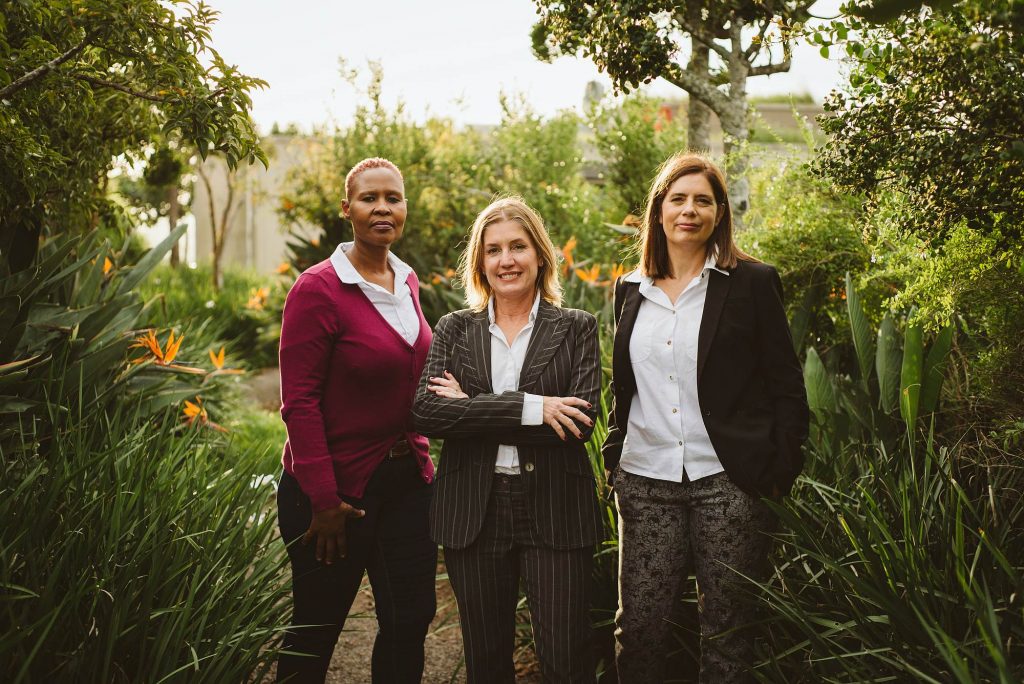
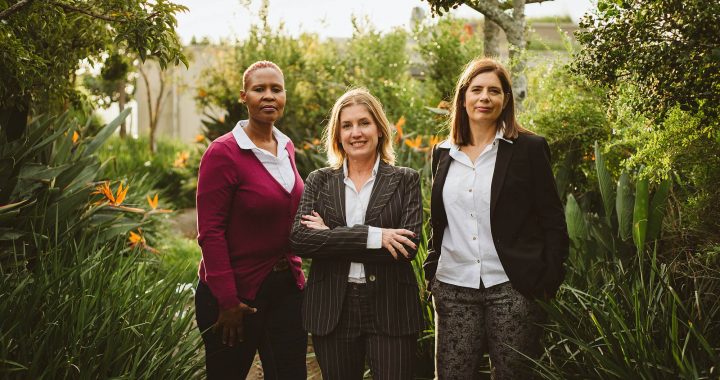
From left: Lihle Mbokazi, Liaison Manager; Janice Tooley, Executive Director and Attorney; Kirsten Youens, Chief Executive Director and Attorney.

To our valued network, 

You are receiving this newsletter because you have been a supporter of our work over the years and we are excited to share our new developments with you.

As many of you know, our pro bono work began years ago in northern KwaZulu-Natal (KZN). Being witness to the injustices in northern KZN was the turning point for us, and where our law careers became our passion. We realised the positive impact we could have on thousands of people who don’t have access to the information or legal support they need to advocate for their own rights. And that we could play the role of educator, rights defender and ally. Combining our environmental and human rights activism with the law has made us even more committed to our profession.  Ultimately, this led to the establishment of ALL RISE.

ALL RISE, a non-profit organisation and registered law clinic for climate and environmental justice has launched in KZN, becoming the only pro bono attorneys in the province working exclusively in the environmental field. It is one of a few in the country assisting communities and organisations assert their Constitutional right to an environment that is not harmful to their health or well-being. 

Our all-woman legal team consists of passionate and experienced attorneys who represent those who cannot afford legal services. ALL RISE takes on other matters of public interest, offering legal advice on a range of environmental and climate change issues; litigating when necessary; and providing representation in environmental impact assessment (EIA) processes and administrative appeals. The team provides community support and training as well as advocacy for wildlife and the environment which currently have no independent legal status. 

ALL RISE has identified a number of challenges that it seeks to rectify through the newly formed law clinic: 

  • Lack of access to the legal system to enforce environmental rights and very few pro bono attorneys to do the necessary work. 
  • People not knowing and understanding their rights and the processes through which they are entitled to express their views and exercise such rights.
  • Environmental issues not being given the same weight and attention as other issues. 
  • Government not having the capacity or the will to adequately protect the environment and people’s rights, especially those who are vulnerable and disadvantaged.
  • The urgency of addressing climate change. 

South Africa has one of the best Constitutions in the world. Our Bill of Rights encompasses fundamental rights to life and equality; to food, water and housing; and to an environment that is not harmful to one’s health or well-being. The challenge lies in enforcing these rights. Rights on paper are not enough. Without lawyers acting pro bono and generous funders who can cover the high costs of litigation and client engagement, it is impossible to put these rights, so eloquently set out in the Constitution, into effect.

Our dynamic team has made significant impact in environmental law issues over the last few years that have gained national and international attention, particularly in the fossil fuel, wildlife and marine space. 

Most of our energies so far have been directed towards a number of coal mines in Northern KZN which adversely impact rural communities, the iconic Hluhluwe-iMfolozi Park, and the Mfolozi and Nyalazi river catchments which feed into the southern part of the iSimangaliso Wetland Park World Heritage Site and the St Lucia System Ramsar Site. 

Of these mines, the most intensive matters to date have been the two High Court challenges brought against Tendele and its Somkhele open cast coal mine. This has been done on behalf the Mfolozi Community Environmental Justice Organisation (MCEJO) comprising over 3,000 members, as well as the Global Environmental Trust (GET), ActionAid South Africa, Mining Affected Communities United in Action (MACUA), and the Southern African Human Rights Defenders Network, all of which have a long association with MCEJO and supporting its members in their fight against the environmental and social injustices. 

Undeterred after losing in the lower courts, the first case is being taken to the Constitutional Court on appeal and is currently awaiting a hearing. The second case, which is a review application challenging Tendele’s 2016 mining right, will be heard in the Pretoria High Court on 6 and 7 October.

The ALL RISE team and especially its clients face ongoing challenges both in and outside of the courtroom, including threats and acts of violence. Tragically, one of MCEJO’s long-standing members was murdered in October 2020 for being very vocal in her opposition to the mine. Other members have been shot at and assaulted and many more are constantly under threat for exercising their rights. 

ALL RISE sees the safety and well-being of clients as a crucial and unique service we  provide. Lihle Mbokazi is ALL RISE’s Liaison Manager who together with psychologist, Sheila Berry, organises community meetings, training, provides trauma counselling and facilitates access to security measures offered by partner organisations.

ALL RISE aims to combat climate change and promote environmental justice to protect people, wild species and the planet; to empower people to understand and enforce their Constitutional Rights; and to advance law and practice by promoting best and better practice in EIAs, public participation and decision-making.

It has taken many years of hard work to get to this point and we could not have done it without support from other lawyers, organisations and individuals – far too many to mention them all here by name. Public interest law and social justice is a collaborative effort and our work is a good example of just how important that is. 

Thank you for all the support we have received so far. We will continue to fight on behalf of those who can’t. And we will bring about the changes that we envision. Both for people and for the planet.  We look forward to working together to make the world a better place. 

Regards,

Kirsten Youens , Janice Tooley and Lihle Mbokazi