DISAPPOINTING DECISION BY MINISTER CREECY

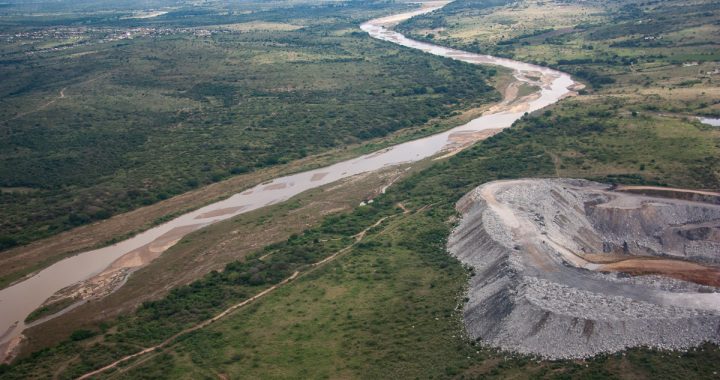
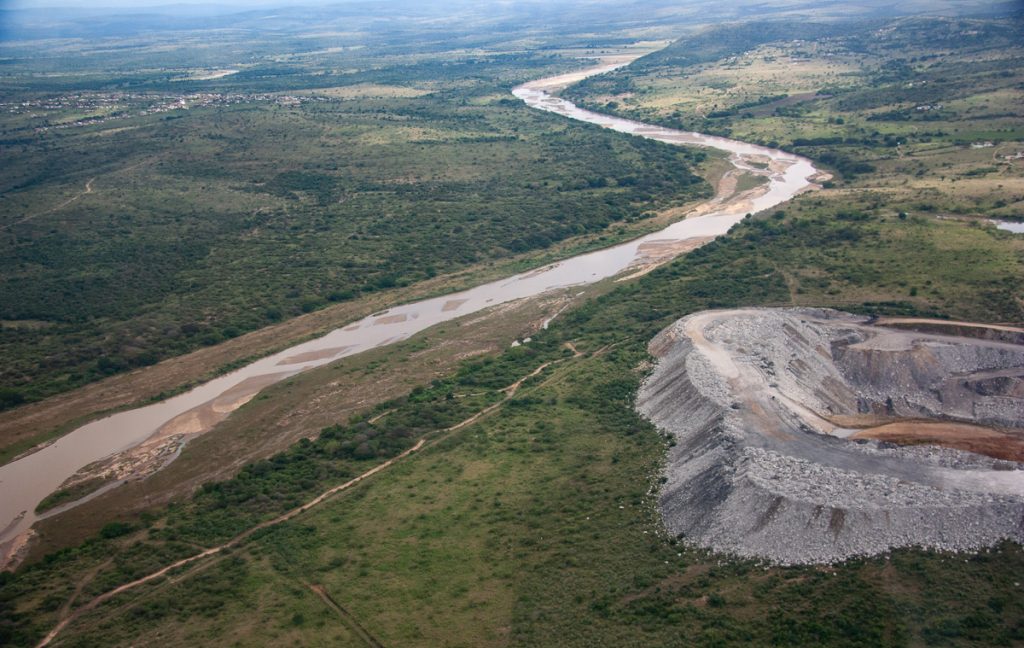
Mfolozi river black with pollution

On 7 March, the Minister of Forestry, Fisheries and the Environment (DFFE) Barbara Creecy, dismissed four separate appeals against the environmental authorisation granted by the Department of Mineral Resources and Energy (DMRE) to the Zululand Anthracite Colliery (ZAC) for its new Mngeni Adit located in Nongoma, northern KwaZulu-Natal. The concerns raised by the four appellants are not isolated to the Mngeni Adit. They come on the back of ZAC’s poor environmental and community track record since the mine opened in 1985.

The effect of the appeal decision is that about 600 residents of the peaceful rural village of Masokaneni, are effectively invisible to the government who is supposed to hold the environment in public trust for the people when making decisions. 

The approval of the Mngeni Adit will result in more than 70 extended families being subjected to dust, light and noise 24 hours a day, seven days a week for five years, preceded by two years of construction. They will also have to endure blasting on a frequent basis. These local residents, mainly subsistence farmers, will lose 8 ha of natural grazing land (the size of about 11 soccer fields) and their water resources will be affected. There is also a real fear of sinkholes from the mining taking place right underneath them, as well as their houses cracking from the blasting. They know, because they have seen this happen in other areas where ZAC has been active.

The fate of these families has been ignored and downplayed – firstly, by the environmental consultants GCS, then by the Department of Mineral Resources and Energy (DMRE) and now by DFFE’s Minister Creecy.

GCS is required by law to identify and assess all the impacts on local socio-economic conditions. This it did not do.  Based on GCS’s flawed Basic Assessment Report (BAR), the DMRE granted the environmental authorisation anyway thus neglecting its duty to ensure that all these impacts were duly identified, assessed and mitigated as part of the EIA process.  Now, the appeal authority, Minister Creecy, has done the same by supporting DMRE’s decision to grant the authorisation despite these glaring omissions being brought to her attention in the appeal lodged by All Rise Attorneys for Climate and Environmental Justice on behalf of the Global Environmental Trust (GET)  and in the appeal lodged by a resident of Masokaneni. 

One of the serious concerns is the increased noise levels that the mining activities will generate. The noise specialists, WardKarlson Consulting, determined this impact to be medium to strong, especially at night, for the receptors positioned in the Masokaneni village.

GCS disregarded this by insensitively stating “the people in the vicinity of these mining activities are already used to the increased noise levels created by the mining activities, hauling vehicles and motor-vehicles” as a result of existing mining operations in the vicinity. GCS is not only dismissive of these loud intrusions and people’s right to an environment that is not harmful to their well-being, but this statement is also misleading. The nearest mining operations are more than 5 km away. One of the impacts of mines that residents constantly complain about is noise, indicating that people do not simply get used to the noise intrusions from mining operations. GCS also distorted the specialist findings by conflating the ratings for all noise receptor sites, most of which were located much further away from site and the adjacent houses of Masokaneni village, thereby minimising the results. This does not accord well with the professional standards required of independent environmental assessment practitioners (EAPs).

The DMRE accepted GCS’s flawed recommendations at face value. Minister Creecy, the appeal authority, in her decision incorrectly relied on an unsubstantiated assumption that these impacts can be reduced by mitigation measures and on a falsehood that people do not live closer than 500m to the shaft boundary. This is difficult to comprehend given that the specialist reports acknowledge that the nearest homesteads are about 200m away and the annotated aerial photographs in GCS’s Basic Assessment Report reveal the distance to be as close as 50m for some homesteads. Whoever was advising the Minister clearly had not read the environmental impact assessment (EIA) reports and the appeal grounds very carefully and showed a lack of care and concern for the residents who will be subjected to untenable living conditions.

Another example of the defective EIA process and the decisions taken by the authorities, is the lack of a social-economic specialist study. Our law requires that in addition to the impacts on the environment, the social and economic impacts MUST be considered, assessed and evaluated, including the benefits AND disadvantages,

Minister Creecy sidesteps this issue and simply echoes ZAC’s response that the project is justified because of the employment and community projects it brings. However, the EIA Regulations make it clear that impacts need to be identified and assessed and cannot simply be ignored because the mine creates employment and has a Social and Labour Plan in place. These types of benefits are not mitigation measures to the residents who will have to suffer the direct adverse impacts of a mine shaft on their doorsteps and mining the coal reserves underneath their houses.

The DMRE defended the lack of a socio-economic study on the disingenuous basis that there was no comment received from any Interested and Affected Parties (I&APs) during the public participation process that requested or identified that such a study was required. This is an absurd justification. As already mentioned, it is the duty of the EAP and the competent authority to ensure that the social and economic impacts are adequately considered, assessed and evaluated, and this is irrespective of whether it is explicitly requested by an I&AP or not.

In any event, the public participation process conducted as part of the EIA process for the Mngeni Adit was inadequate. This is another of GET’s appeal grounds. Contrary to Minister Creecy assertion, the minimum requirements were not met as the lawful occupiers who will be affected by the Mngeni Adit were not notified in the prescribed way and they were not provided with sufficient information in a way that facilitated meaningful participation. Most of their concerns raised at the single community meeting went unanswered, the EIA reports were not accessible and were written in English only. This is unacceptable in the case where the directly affected parties are isiZulu-speaking. 

The other two appeals against Mngeni Adit’s environmental authorisation on numerous other grounds were submitted by Ezemvelo KZN Wildlife, KwaZulu-Natal’s conservation authority, and the uMfolozi Big Five Trust which represents the Traditional Councils of Obuka, Somopho and Mandlakazi. Understandably, KZN Wildlife is extremely concerned about the adverse ecological impacts of the Mngeni Adit and associated mining activities on the biodiversity of the area and the adjacent Hluhluwe-iMfolozi Park it manages, as well as the Black Mfolozi River that flows through the Park. The uMfolozi Big Five Trust is concerned about the impacts on its nearly completed upmarket lodge on the banks of the Black Mfolozi River, about five kilometres from the proposed mining site. 

It must be remembered that ZAC is the same company that has repeatedly flouted environmental laws. Most recently, on 24 December 2021 one of its slurry dams collapsed resulting in 1 ½ million litres of polluted coal water flooding the surrounds, including the Mvalo Stream and pouring into the Black Mfolozi River that flows past rural villages relying on water from the river for their needs, through the Hluhluwe-Mfolozi Park and eventually into the iSimangaliso World Heritage Site. This matter is still under investigation by the authorities. Meanwhile affected communities, I&APs  and supportive NGOs are still waiting for answers.

When Janice Tooley, Director of All Rise representing GET, was asked if Minister Creecy’s dismissal of the appeals is the end of the road, she said that whilst she cannot speak for the other appellants, All Rise was in discussions with GET about taking the environmental authorisation and appeal dismissal on review in the High Court. She added that “it is regrettable that the burden of protecting the environment and vulnerable communities is left to civil society and the courts”.

Link below to EIA reports, environmental authorisation, appeals, responding statements and appeal decision: 

https://drive.google.com/drive/folders/1yhmFXf_AwgM5YW-tuTK93bIivx3OnIlZ?usp=sharing

MINISTER’S PROPOSED CHANGES TO THE S24H REGULATIONS WILL HAVE A CHILLING EFFECT ON APPEALS

Written by Janice Tooley

Section 24H of the National Environmental Management Act (NEMA) allows for the establishment of a registration authority to regulate the practice and conduct of environmental assessment practitioners (EAPs). The sector has long identified the need for a formally recognised body to promote the professionalism of environmental consultants by ensuring EAPs meet certain technical standards and conduct themselves in an ethical manner.

In 2016, Regulations were published by the Minister of Environmental Affairs setting out the process for appointing a registration authority and specifying the tasks in relation to an application for environmental authorisation that may only be performed by a registered EAP.

In February 2018, the Environmental Assessment Practitioners Association of South Africa (EAPASA) was appointed as the sole S24H registration authority and all EAPs were required to register with EAPASA by 8 February 2020. In August 2020, the Minister extended this deadline to 8 February 2022.

Recently, the Minister published her intentions to push this deadline to 8 August 2022 and to expand the list of licence applications for which only a registered EAP may undertake the tasks as specified, predominantly in relation to environmental impact assessment (EIA). However, it appears now that the Minister also wants to restrict the preparation of Section 43 appeal submissions by making it mandatory for any person who wants to appeal an environmental authorisation or waste management licence to appoint an EAP to do so. In practice, this would effectively prevent Interested and affected Parties from preparing and submitting their own appeal without an EAP’s involvement and would also exclude I&APs from being able to be legally represented in an appeal.

In the public interest sector, lawyers like ALL RISE work pro bono to assist indigent individuals and communities in appeals, often as a result of them having not been extended the opportunity to participate meaningfully in an EIA process. Should the Minister’s proposed amendment come into law, this assistance to communities would no longer be possible.

ALL RISE has made written representations to the Minister setting out why these proposed amendments to S24H Regulations prohibiting legal representation in an appeal would be unlawful, expressly on the basis that it is contrary to the Promotion of Administrative Justice Act (PAJA). Our Supreme Court of Appeal ruled in Max Hamata v Chairperson, Peninsula Technikon Internal Disciplinary Committee that the flexibility to allow legal representation is “a constitutional imperative”. There cannot be a blanket rule that prohibits legal representation outright as this would impede on the procedural fairness of administrative decisions, especially where they involve complex environmental issues and have the potential for grave consequences.

We have taken the opportunity to submit comments in the interest of upholding our collective right to have the environment protected and look forward to receiving the Minister’s response as do the many other interest groups that submitted their comment criticising this potentially chilling effect on Section 43 appeals. 

Read our full submission here.

STOPPING SHELL: IT’S A WIN FOR COMMUNITIES AND THE ENVIRONMENT!

By Kirsten Youens

In a well-received judgement handed down on 28 December 2021 by Judge Bloem, Shell was ordered to immediately cease its seismic survey along the Wild Coast of South Africa. The urgent interdict was granted pending the hearing of an application for Shell to be interdicted from conducting its surveys until it has obtained an environmental authorisation in terms of the National Environmental Management Act (NEMA).  The Court ordered Shell and the Minister of Mineral Resources and Energy to pay the costs of the application for the interim interdict.

All Rise Attorneys for Climate and Environmental Justice along with Sustaining the Wild Coast (SWC), the Dwesa-Cwebe Communal Property, Ntsindiso Nongcavu, Sazise Maxwell Pekayo, Mashona Wetu Dlamini and  Cameron Thorpe lodged the urgent application against Shell’s seismic survey off the Wild Coast in December 2021. We were represented by Legal Resources Centre and Richard Spoor Inc.

The two main issues were that firstly, Shell had not secured environmental authorisation under NEMA but relied on an Environmental Management Programme that was submitted and approved as part of an application for an exploration right to use seismic surveys to seek out oil and gas reserves in terms of section 79 of the Mineral Petroleum Resources Development Act (MPRDA) and secondly, Shell had failed to consult with communities and individuals in the process of applying for its exploration right. 

At the hearing, Advocate Tembeka Ngcukaitobi, senior counsel for the applicants, argued that the court cannot endorse a farcical consultation process. He described the matter as being about the significance of consultation; that consultation would have unlocked insight into community lives. He said “If you don’t consult with people, it is as if you don’t see them. You treat them as if they don’t exist.”

In his judgement, Bloem J confirmed that Shell had a duty to meaningfully consult with the communities and individuals. Shell had failed to consult with the applicant communities who hold customary rights, including fishing rights. He acknowledged that the applicant communities also hold a special spiritual and cultural connection to the ocean and it was therefore crucial for Shell to consult them to understand how the survey would impact them. 

Bloem J held that “Shell should not be allowed to use the consequences of its own failure to adequately consult with all the interested and affected persons as a ground for why an interim interdict should not be granted against it. Constitutional rights are at stake. The financial loss that Shell and Impact Africa are likely to suffer cannot be weighed against the infringement of the Constitutional rights in question. The breach of those constitutional rights threaten the livelihoods and well-being of the applicant communities as well as their cultural practices and  spiritual beliefs. Where constitutional rights are in issue, the balance of convenience favours the protection of those rights.” 

The Court found that the exploration right, which was awarded on the basis of a substantially flawed consultation process, was unlawful and invalid. The applicants’ right to meaningful consultation constituted a prima facie right which deserved to be protected by way of an interim interdict.

Judge Bloem did not make an order regarding the lack of environmental authorisation but he did find that: “Whether or not Shell requires an environmental authorisation obtained under NEMA is a difficult legal issue. The Minister caused an affidavit to be delivered wherein he adopted the stance that “the environmental management programme used to support the application made by [Impact Africa] for the renewal of its exploration right …… constitutes an environmental authorisation, as envisaged by the National Environmental Management Act 107 of 1998 (NEMA)”. Whether this is so, however, is a decision to be made by the court. Although I am of the view that the applicants have prospects of success in that regard, it is a matter that should rather be considered by the court”.

Bloem J devoted much of his judgment to setting out the harm that the seismic survey will have on marine life and concluded by stating that the applicants had established a reasonable apprehension of irreparable harm.

ALL RISE is extremely gratified that the Court acknowledged the need to involve communities in decisions affecting them; to understand and accept cultural and spiritual practices; and to acknowledge the importance of protecting our marine environment. It is a progressive judgement that will be referred to and cited for many years to come. 

Unfortunate Environmental Authorisation Precedent Stands as Application to the Constitutional Court Dismissed

Unfortunate Environmental Authorisation Precedent Stands in the matter between the Global Environmental Trust & MCJEJO v Tendele Coal Mining (Pty) Ltd and Others as Application to the Constitutional Court Dismissed

By Kirsten Youens

On 11 January 2022 the long awaited decision by the Constitutional Court regarding our application for leave to appeal filed in April 2021 was received. Disappointingly, it was dismissed which means that this important legal issue will not be argued in South Africa’s highest court.

The background to this matter between our clients (the Global Environmental Trust and the Mfolozi Community Environmental Justice Organisation) and Tendele Coal Mining (Pty) Ltd revolved around the interpretation of the Mineral and Petroleum Resources Development Act 28 of 2002 (MPRDA) and the National Environmental Management Act 107 of 1998 (NEMA) before the “One Environmental System” came into force on 8 December 2014. In short, the issue was whether the environmental impact of mining operations was exclusively dealt with under the MPRDA through approval of the Environmental Management Programme (EMP), or whether an environmental authorisation issued under NEMA was also required before mining operations could commence.

Tendele has neither applied for nor been granted environmental authorisation under NEMA for its open cast coal mine in northern KwaZulu-Natal, but held the view that its EMPs prepared and approved in terms of the MPRDA were sufficient. Our clients demanded Tendele seek an environmental authorisation under the NEMA. Tendele’s argument was that no environmental authorisation was required for mining rights sought before December 2014. 

We applied for an interim interdict to stop Tendele from mining until it obtained environmental authorisation. The Pietermaritzburg High Court sided with Tendele. After criticising the applicants’ pleadings, the court found that mining rights sought before December 2014 do not require environmental authorisation. According to the High Court, the MPRDA covered all environmental impacts of mining and NEMA had no role even with regard to the ancillary activities related to mining that were listed in the NEMA Environmental Impact Assessment regulations. The High Court also ordered costs against the applicants with no reference to the principles of Biowatch (ie. persons should not be deterred from enforcing their rights in fear that they will have to pay their opponent’s costs if they do not succeed). This principle arose from the Constitutional Court case of Biowatch Trust v Registrar Genetic Resources and Others. 

Given that a judgment stands until either rescinded or set aside by a court of appeal, our clients appealed this judgment to the Supreme Court of Appeals (SCA). 

The majority judgment handed down by the Supreme Court of Appeal dismissed the appeal on the basis of its pleadings. It criticised the applicants for not enumerating which specific listed activities Tendele undertook that obliged it to seek an environmental authorisation under NEMA. The majority judgment however did not address the legal issue of the requirement for environmental authorisation under NEMA nor the issue of the costs order.  

However, one of the judges, Schippers JA, was not persuaded by Tendele’s “quibbles” about our pleadings in his dissenting judgment. He called them ‘opportunistic and contrived’. Schippers JA accepted our argument that there was no genuine dispute over whether Tendele is conducting listed activities. Tendele is mining ‘one of the largest resources of open-pit mineable anthracite reserves in South Africa’ and it therefore must be conducting listed activities. Also, Tendele never denied that its ‘mining operations triggered any listed activity.’ 

Schippers JA’ dissenting judgment would have interdicted Tendele from mining without an environmental authorisation and ordered Tendele to pay costs. Boosted by this dissenting judgment, in April 2021 we sought the Constitutional Court’s leave to appeal  the majority judgment of the Supreme Court of Appeal. 

On 11 January 2022 we received notice that the Constitutional Court had dismissed our application. Therefore, the law right now is as pronounced by the High Court – that environmental authorisation is not required where a mining right was applied for before December 2014. The precedent of the High Court’s costs order against the community organisation and the chilling effect it has on constitutional litigation against mining companies, also still stands. 

The law around environmental authorisations for activities related to mining prior to December 2014, therefore remains murky. 

In the Mabola Case, the Court was faced with an application to review and set aside a decision to permit coal mining activities in a protected wetlands area.  Judge Davis held that the party seeking to conduct such mining activities would be required to obtain five different authorisations, including the approval of its EMP in terms of section 39 of the MPRDA and environmental authorisation for listed activities in terms of section 24 of NEMA. 

The Court in the Mineral Sands Resources case adopted the same view, albeit obiter, with Judge Rogers finding that prior to 8 December 2014 the decision to approve an applicant’s mining EMP and to grant the mining licence effectively constituted the environmental authorisation to conduct the mining activity but at the same time, the applicant would also have needed to obtain a NEMA environmental authorisation.

Recently, in case of Sustaining the Wild Coast NPC and Others against Shell’s seismic survey being undertaken on the Wild Coast, in which ALL RISE, NPC was an applicant, Judge Bloem held in his judgment:

Whether or not Shell requires an environmental authorisation obtained under NEMA is a difficult legal issue. The Minister caused an affidavit to be delivered wherein he adopted the stance that “the environmental management programme used to support the application made by [Impact Africa} for the renewal of its exploration right…constitutes an environmental authorisation, as envisaged by the National Environmental Management Act 107 of 1998 (NEMA)”. Whether this is so, however, is a decision to be made by the court. Although I am of the view that the applicants have prospects of success in that regard, it is a matter that should rather be considered by the court which will determine the relief south under Part B of the notice of motion. 

Thus, it is unfortunate that in our Global Environmental Trust matter the majority of the SCA did not deal with the environmental authorisation issues. However, as mentioned above, Schippers JA dealt squarely with the fact that a separate environmental authorisation under the NEMA was required:

It is clear, simply from the above provisions of NEMA, that an environmental authorisation granted by a competent authority under NEMA is not the same thing as an EM approved under the MPRDA. In Minister of Mineral Resources v Stern (to which we were not referred), this court assumed, without deciding, that an environmental authorisation under NEMA is essentially the same as an EMP. In my view, it is not. An environmental authorisation is required for the commencement of an activity identified in a listing notice. The impacts of listed activities on the environment are assessed in order ‘to give effect to the general objectives of integrated environmental management’ in Chapter 5 of NEMA, which lays down rigorous processes for that assessment.

We agree that it is clear. Section 5A of the MPRDA provides that no person may prospect for or remove, mine, conduct technical co-operation operations, reconnaissance operations, explore for and produce any mineral or petroleum or commence with any work incidental thereto on any area without an environmental authorisation. Section 24F of NEMA prohibits the commencement of any listed activity without an environmental authorisation. What were two parallel processes prior to 2014 – one being the environmental authorisation process under NEMA and the other being the EMPr under the MPRDA – became ONE process with the introduction of what is aptly referred to as the One Environmental Management System on 8 December 2014. Conducting mining activities authorised prior to 8 December 2014 in the absence of an environmental authorisation issued in terms of section 24 of NEMA are unlawful. Unfortunately, the Constitutional Court will not be deciding the issue and legal certainty is still needed.

ALL RISE 2021 – Our Year in Review

Kirsten Youens, Janice Tooley and Lihle Mbokazi – photo by Casey Pratt

2021 has been a challenging year for ALL RISE and our clients as we have continued to navigate the Covid-19 pandemic on top of all the usual challenges faced in the public interest law space.

With our small but dedicated team we are very proud of all we have accomplished this year and take this opportunity to thank all those who support us and our clients in working towards environmental and climate justice.

Reflecting on 2021, we would like to share our highlights, struggles and direction for next year.

Strategic litigation on behalf of mining-affected communities

Our main focus has again been strategic litigation against Tendele Coal Mining (Pty) Ltd which we initiated on behalf of MCEJO and GET, firstly in 2017, in an application for an interim interdict, and secondly, in 2018, in a review application of the mine’s 2016 mining right to significantly expand its current open cast coal operations.

In respect of the first case, the interim interdict, we filed an application on 8 April for leave to appeal to the Constitutional Court (“Constitutional Court Appeal”) againstthe majority judgment of the Supreme Court of Appeal requiring the Constitutional Court to provide finality on whether environmental authorisation is required for mining activities applied for and authorised under the MPRDA before December 2014. We also seek the Constitutional Court’s correction of the High Court’s costs order and the chilling effect it will likely have on public interest litigation. We hope to be allocated a court date in the second quarter of 2022. We would like to extend our gratitude to Advocates Tembeka Ngcukaitobi SC and Mawande Mazibuko for all their hard work on this case.

The second case, the application to review and set aside Tendele’s 2016 Mining Right based on its wholly inadequate EIA and consultation process was at last heard on 10 to 12 November, after no less than 5 postponements.

In one of its many attempts to halt the court case, Tendele filed a second Rule 7 application in December 2020 disputing Youens Attorneys’ mandate, which it withdrew only after a challenge was brought by a group of six suspended MCEJO members in early February of this year asking the Court to declare Youens’ mandate terminated and to have the review application withdrawn.

Notably, the hearing of the main application in March was scuppered to make way for this spurious challenge by the MCEJO splinter group which was rightfully dismissed. At the same time, ALL RISE successfully applied to the court to grant four new applicants permission to intervene and join the proceedings, and in doing so, gained four new clients -the Global Environmental Trust (GET), Mining Affected Communities United in Action (MACUA), the Southern Africa Human Rights Defenders Network (SAHRDN) and ActionAid South Africa, all of which have a long association with the members of MCEJO in the Somkhele community supporting them in their fight against the environmental and social injustices.

The matter was complicated further when Tendele supplemented its papers in March essentially conceding that the mining right was invalidly granted and undertaking to abandon all but 17.66 km2 of the original 212km2 . Nonetheless it sought to retain the three mining areas of Ophondweni, Emalahleni and Mahujini which it said are necessary to save the mine from closure. Tendele also wanted the court to order that these three areas go back to the Minister to reconsider the original administrative appeal, this time with the numerous additional studies Tendele completed in late 2019 and early 2020 and any comments that interested and affected parties may submit. 

However, the Applicants argued that in addition to the flaws associated with the original EIA studies and public participation process, the size of the retained three mining areas of Ophondweni, Emalahleni and Mahujini are 45% larger than initially assessed. This is particularly so for Mahujini which is now five times its original size. The approximately 27 new studies conducted in 2019 and 2020 are also flawed for varying reasons and the overwhelming majority having been undertaken without any public participation. Thus, any consultation as part of a second round of the appeal would be insufficient. The more appropriate remedy is for the mining right be set aside and the process to begin afresh to identify and address the impacts and community concerns properly. The other issue in dispute is the lack of free, prior and informed consent in terms of the Interim Protection of Informal Land Rights Act, 1996 (IPILRA), and its effect on the original granting of the Mining Right.

Judgment was reserved after the application was heard in November and we anxiously await the outcome. We are extremely grateful to our Advocates Anna-Marie de Vos SC and Louise Ferreira for the long hours they put in settling the papers and arguing on behalf of the Applicants.

We also joined as co-applicants in a second urgent application for an interdict against SHELL and IMPACT AFRICA joining Sustaining the Wild Coast (SWC), together with the Dwesa-Cwebe Communal Property Association, fishermen – Ntsindiso Nongcavu (Port St Johns), Sazise Maxwell Pekayo and Cameron Thorpe (Kei Mouth) – Amadiba traditional leader and healer Mashona Wetu Dlamini in applying for an urgent interdict against Shell’s seismic survey off the Wild Coast.  The matter was heard on 17 December and judgment has been reserved. In this matter, we are represented by another strong legal team consisting of the Legal Resource Centre, Richard Spoor Inc. Attorneys  as well as  Advocates Tembeka Ngcukaitobi SC and Emma Webber.

Administrative action

Litigation is lengthy and costly and it is not the panacea to all fights against injustice. As our courts have held, it is a last resort and internal remedies should first be pursued. These include appeals against various licences that have been issued to companies despite extreme adverse impacts, inadequate mitigation and lack of consultation with affected parties.

We have spent a large part of 2021 participating in appeal processes:

  • ALL RISE is representing MCEJO and GET in appealing Tendele’s water use licence for 142 water uses related to its existing and new mining operations. The appeal was filed on 3 November 2021 and suspends the licence unless the Minister directs otherwise. Among the numerous grounds of appeal, are lack of landowner consent, lack of consultation with the local residents, in particular the rural subsistence farmers in the area who rely on water to sustain their land-based livelihoods and numerous shortcomings in the technical report on which the decision to grant the licence was made.
  • ALL RISE is also representing MCEJO and GET in an appeal filed on 7 December against the decision granting Tendele a waste management licence for the disposal of slurry and mine discard into the KwaQubuka pit. The grounds for the appeal include incorrect listed activities having been applied for and authorised and an EIA that fell short of the technical, reporting and consultation requirements prescribed by the EIA Regulations, 2014, the National norms and Standards for the  Disposal of Waste to Landfill and the Planning and Management of Residue Stockpiles and Residue Deposits, 2015.
  • ALL RISE also submitted an appeal on behalf of GET, of the environmental authorisation granted to Zululand Anthracite Colliery, also operating in northern KwaZulu-Natal (not far from Tendele’s Somkhele mine) to expand its operations and open a new adit to access additional underground coal resources. The adit is directly adjacent to Masokaneni village and yet the residents have not been adequately consulted. ALL RISE has also assisted community members in submitting their own appeals. 

Community Support

Being parties to litigation in a community torn apart by mining is not easy for our clients to say the least. Lihle Mbokazi, ALL RISE’s liaison manager is in constant communication with MCEJO members and assists them in getting legal support from ALL RISE and security support from SAHRDN and Frontline Defenders when necessary.

Trauma counselling is provided to people who have been victimised and intimidated as well as to those who have suffered loss as a result of living in a mining affected community.

We believe in frequent contact with our clients to keep them updated and reassured and in addition to one-one-one contact we were able to hold eleven community meetings with MCEJO during the year.

Defending the defenders

More than a year on, we mourn the death of Mam’FikileNtshangase, one of our incredibly courageous and outspoken members of MCEJO who was brutally murdered for her opposition to the mine, especially as those responsible have not been apprehended. In this regard, we are in regular communication with the police service and continue to explore options with Mary de Haas (violence monitor for KZN) and other public interest groups in the call for justice for Mam’Fikile as well as to prevent further violence against other defenders.

This year, in honour of Mam’Fikile, and on the anniversary of her death, ALL RISE, in collaboration with Global Witness, held an international webinar to raise awareness of the risks of Environmental Defenders faceaptly titled “Defending the Defenders”.

The event was facilitated by Simphiwe Sidu, Regional Legal Advisor of Southern African Human Rights Defenders Network with a formidable line up of speakers:

  • Kirsten Youens, Chief Executive Director of ALL RISE
  • Mary Lawlor – United Nations Special Rapporteur on the situation of human rights defenders. Founder of Frontline Defenders
  • Rowan Williamson – Inspire Dialogue Foundation Trustee, the former Archbishop of Canterbury, and retired master of Magdalene College, Cambridge University
  • Arnold Tsunga – Chairperson of Southern Africa Human Rights Defenders Network. Country director for National Democratic Institute in Zimbabwe.
  • Mary de Haas – Interventionist human rights worker and violence monitor in KwaZulu-Natal, South Africa.
  • Louis Wilson – Senior Communications Advisor, Global Witness

The webinar was attended by 95 people from around the world and the feedback from the participants was very encouraging. We hope to have more of these webinars in 2022.

Holding funders accountable

On behalf of its clients, ALL RISE has very recently written to Nedbank asking it to explain why it has funded and continues to fund Petmin’s and Tendele’s Somkhele open cast mine when this project does not comply with Nedbank’s own environmental and social policy or the various international standards to which the bank subscribes. In particular, this is in respect to involuntary resettlement and significant environmental pollution and degradation which severely impacts on local communities and their livelihoods, and erodes their resilience to climate change. We have also asked Nedbank to reassess this project in light of our submissions. We await Nedbank’s response.

Education, Training, and Empowerment

Part of our vision is to share knowledge and make law accessible to people in their mother tongue so that access to justice can be truly realised. To this end we organised two very successful workshops and are in the process of preparing training material that are the beginnings of exciting things to come:

  • EIA guide in isiZulu and Training Manual for Environmental Assessment Practitioners

A two-day workshop was held with 40 residents from four rural communities, mostly MCEJO members in March 2021 at which participatory training was provided in isiZulu on Environmental Impact Assessment (EIA). The interactions and feedback provided at the workshop are being used to develop a guide to EIA in isiZulu as well as a training programme (methodology and material) on EIA, both of which will be made freely available to environmental consultants, NGOs and communities. 

  • Land rights and mining-related impacts

A two-day workshop in isiZulu was held in August 2021 for 90 MCEJO members to empower people about their land rights, and identify coal-mining related impacts they experience to share with other residents in new areas where coal mining is being proposed. An expert on land rights, Mr Sithembiso Gumbi was invited to speak and answered many questions about rights over land falling under the Ingonyama Trust Board. Role-play and participatory community mapping exercises were also used to encourage maximum participation. We are currently producing an audio-visual clip on land rights in isiZulu so that this knowledge can be freely and widely shared with other MCEJO members and communities.

Lihle Mbokazi, our liaison manager was very fortunate to attend the Centre of Environmental Rights’ annual Environmental Rights and Remedies for Activists training course. Lihle had nothing but praise for the six week course and will be using the knowledge she gained to empower herself and share this knowledge with our clients. With an MCEJO member who also attended, they are together currently working on such a training programme. Once conceptualised, we will be looking for funding to roll it out.

Sharing our experiences

We have deliberately focussed this year on providing a full range of legal services and support to fewer clients rather than spreading ourselves too thin. However, to expand our reach, it is important to share our experiences and knowledge. In addition to the printed and audio-visual material we have already mentioned, we also believe it is important to participate in global, regional and national events both to share what we are doing and to learn from others. Kirsten Youens had the honour of being invited to speak at two important events this year.

  • The Public Interest Law Gathering on 14 October where the topic was A RIGHTS-BASED GREEN RECOVERY POST COVID-19: Where legal and policy efforts to further Animal Wellbeing, Social Justice and a Healthy Environment meet. Kirsten spoke about the wildlife trade, pandemics and the need to stop unsustainable exploitation of the environment – both for the prevention of future pandemics and the upliftment of the morality of humankind.
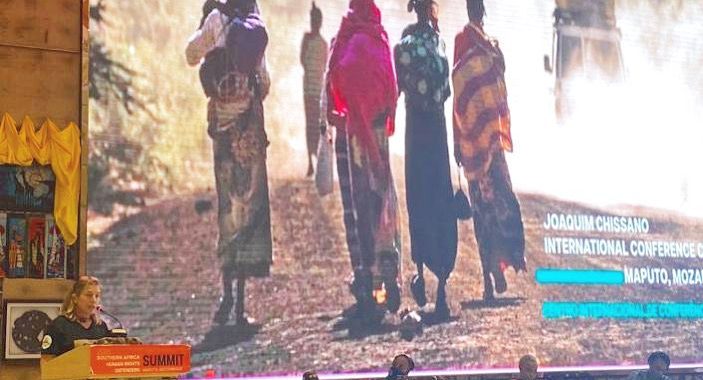
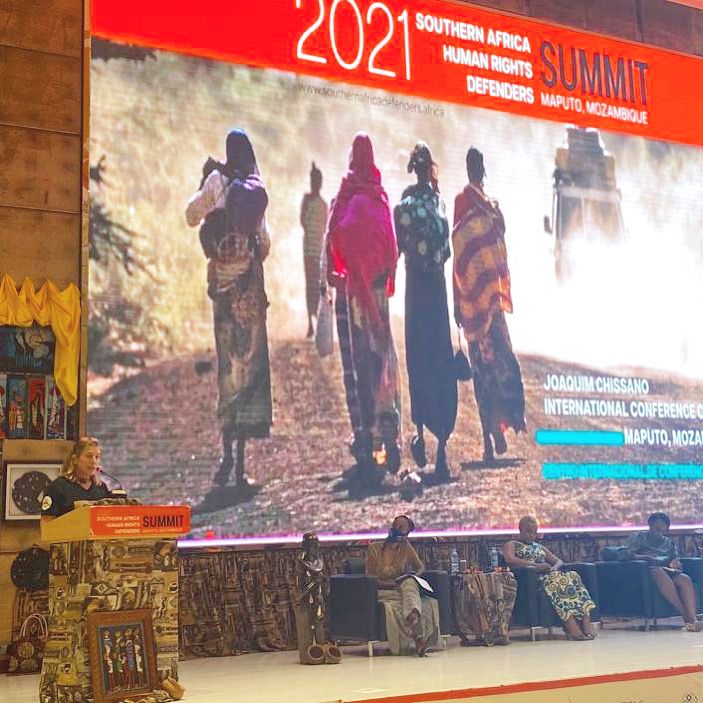
  • The 2021 Southern Africa Human Rights Defenders Summit held in Maputo Mozambique on 2nd and 3rd December. Kirsten presented both in a side panel session on environmental defenders and in the plenary session on a panel for woman human rights defenders. It was a wonderful opportunity to meet the inspiring defenders from Southern Africa, to learn from each other and to collaborate to ensure that the incredible work done by individuals and public interest organisations in this field continues.

It is truly a privilege to work with Animal Law Reform and SAHRDN and we look forward to further collaboration in the future.                                                                                                                                       

In closing                                                                                                      

We close our offices for the year knowing that we have worked hard to lay a solid foundation for 2022 and beyond, as we continue to grow, learn, share and act …. and make a difference.

May 2022 bring us all a year of victories that address the inequities, give power back to the people and stop the environment from being treated as a mere exploitable commodity.

For now though, we wish you a good long rest and peaceful time with loved ones.

Appreciatively,                                                           

Kirsten, Janice and Lihle.                                                                                                       

Kirsten Youens speaks at Southern Africa Human Rights Defenders Summit in Mozambique

Kirsten Youens, Chief Executive Director of ALL RISE was invited to attend the Southern Africa Human Rights Defenders Summit in Mozambique last week to share her experience as an environmental defender and as a lawyer defending those who are in need of environmental justice.

She addressed important issues such as government being held accountable for its failure to defend the defenders, and upholding the Constitutional rights of it’s citizens. Kirsten spoke on environmental justice in a side session and woman defenders in the plenary session. Thank you to SAHRDN for the invitation

SUSTAINING THE WILD COAST AND COMMUNITIES SEEK INTERDICT AGAINST SHELL IN SECOND APPLICATION

Sustaining the Wild Coast 2021/12/3

Yesterday (2 December 2021), Sustaining the Wild Coast and several Wild Coast communities filed papers seeking to interdict Shell’s seismic survey on the Wild Coast.

Sustaining the Wild Coast (SWC), together with the Dwesa-Cwebe Communal Property Association, fishermen – Ntsindiso Nongcavu (Port St Johns), Sazise Maxwell Pekayo and Cameron Thorpe (Kei Mouth) – Amadiba traditional leader and healer Mashona Wetu Dlamini and All Rise Attorneys for Climate and Environmental Justice have applied for an urgent interdict against Shell’s seismic survey off the Wild Coast.  The matter has been set down for hearing on 14 December.

This application is separate from the urgent application that was brought by Cullinan and Associates for the Border Deep Sea Angling Association, Kei Mouth Ski Club, Natural Justice, and Greenpeace that was heard on Wednesday and disappointingly dismissed earlier today.

Sinegugu Zukulu, speaking on behalf of SWC, said:

“Our application for an urgent interdict is based on the simple fact that Shell does not have an environmental authorisation in terms of the National Environmental Management Act for this survey. We know that this survey was approved in 2014 but it is now 2021 and we need to ensure that any illegal offshore exploration is not allowed by our government through negligence or misinterpretation of changes in law since 2014. We are calling for an immediate halt to the survey and that no seismic surveying be allowed without a proper Environmental Authorisation (EA).

An EA will ensure that the views of the people of South Africa, particularly those of rural Eastern Cape Coastal communities, are taken into account in a decision about offshore oil and gas exploration and extraction. These are the people who will be most affected by any negative impacts of exploration and extraction. An EA will also ascertain the wisdom of doing a seismic survey in the unique and famously biodiverse marine ecosystems of the Wild Coast in the light of new research that has been done in the years since 2014. We cannot allow this exploration to be approved and proceed on the basis of outdated and inadequate research. Our descendants will curse us for that stupidity and the desecration of the beautiful Wild Coast which sustains us and attracts and inspires nature lovers from across the globe.

Indigenous people, living on communally owned land occupy 20% of the earth’s land but protect 80% of the earth’s remaining biodiversity. Domestic and international law is increasingly recognising the rights of these indigenous communities but Shell’s process with regards to this survey, enabled by Minister Gwede Mantashe of Department of Mineral Resources and Energy has not recognized these rights. Together, Shell and Mantashe are behaving like the colonial and apartheid powers that came before them by not listening to the indigenous communities of the Wild Coast who have lived in harmony with the ocean for centuries and rely on it for their physical and spiritual well-being.

The impacts of climate change are being felt all across South Africa and the world and the extraction of fossil fuel off our coast will contribute to more catastrophic climate change that will affect the whole human family. As indigenous people we feel the need and the responsibility to protect the ocean for the well-being of all of us. Ulwandle Yimpilo – the Ocean is Life. That is why we are seeking this urgent interdict.”

The applicants are represented by the Legal Resource Centre and Richard Spoor Inc. Attorneys. Their counsel are Advocate Tembeka Ngcukaitobi SC and Advocate Emma Webber.

REVIEW HEARING HEARD 10-12 NOVEMBER IN THE PRETORIA HIGH COURT – SOME FEEDBACK

The court hearing for the review of Tendele’s vast 2016 mining right was from the 10 – 12 November 2021. The hearing of the case went well, with the Applicants’ advocate, the formidable Anna-Marie de Vos  presenting a clear and compelling argument. Acting Judge Bam was clearly well prepared and concerned about the impact of mining on the community and the lack of community consultation and consent. Tendele’s advocates conceded that the mining licence was unlawful, but that if Tendele was not able to expand into the area under review, the mine would close and the people would lose their jobs. Although Tendele conceded that its public participation process was flawed and its mining right was granted unlawfully, Tendele stated its intention to mine in three locations, namely Mahujini, Malahleni and Ophondweni. 

Tendele proposed that it does a public participation process in terms of the EIA regulations (to include all the 27 new specialist studies concluded last year) while the matter  goes back one step to the administrative appeal stage. In other words, it will be referred back to Gwede Mantashe, the Minister of Mineral Resources, to decide on the appeal again. (Please bear in mind that it was Gwede Mantashe who refused the Applicants’ appeal in 2018 which resulted in the court application being launched in the first place). Even more astoundingly, Tendele intends to mine Malahleni and Ophondweni in the meantime.

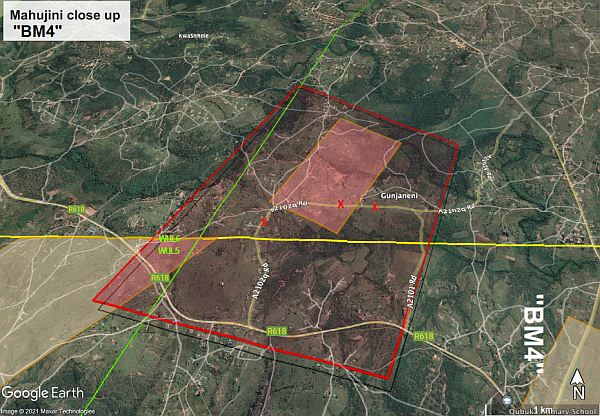
The Applicants’ strongly opposed this approach and argued that Tendele’s invalid mining licence must be set aside, a new mining right applied for to the regional Department of Mineral Resources and the public participation and EIA process must begin. She said “you can’t just leapfrog over the law because you want to start mining in 2022.” It was made clear that if Tendele are allowed to mine in the meantime, there would be no point in doing the public participation, and the entire review application would be a waste of time. Advocate de Vos referred Acting Judge Bam to a Google Earth image of one of the three locations [image below] where the mining pit is depicted in red. She stated: “look at the homesteads around the mining area. There are thousands of people living close to the proposed mine who will be affected. None of these people have been consulted.” This goes for all of the proposed areas and when it comes to the area depicted on the map below, NO-ONE, whether inside or outside the mine area, has been consulted. 

Advocate de Vos also told the judge that the manner in which Tendele had conducted themselves during the legal process was despicable and referred to the Rule 7 application papers (available here).

What was not mentioned in Court was the fact that the CEO of Tendele mine had written directly to Gwede Mantashe on 4 October begging him to intervene in the matter to safeguard the future of the mine. It’s no wonder that Tendele wants the matter to go back to this same Minister to decide whether the mining right should be allowed to stand or not.

MCEJO – “a big thank you to our lawyers for walking with us on this journey. It was a long one but it resulted in our voices being heard and ultimate victory will be ours.”

Judgement was reserved.

Appeal of Water Use Licence – Tendele Coal Mine

Tendele Mine on the banks of the Mfolozi River – photo by Rob Symons

Last week brought another challenge to Tendele Mining (Pty) Ltd, a subsidiary of Petmin, with an appeal being lodged against its water use licence issued by the Acting Director-General of the Department of Water and Sanitation. 

The appeal was lodged by ALL RISE Attorneys for Climate and Environmental Justice on behalf of the Mfolozi Environmental Community Justice Organisation, MCEJO and the Global Environmental Trust. 

Both these organisations are applicants with MACUA, SAHRDN and ActionAid SA in a court application challenging the validity of Tendele’s mining right granted in 2016 which allows the mine to significantly expand its operations into new areas. The matter is being heard virtually this week on the 10th to 12th of November by the Pretoria High Court.

Asked why the water use licence is being challenged, Janice Tooley, attorney and director at ALL RISE said that it was for multiple reasons which are set out in detail in the appeal. One of the main reasons is that Tendele and its consultants GCS had failed to consult with the very people who will adversely be affected from mining operations and the associated 142 water uses that have been approved, including the permanent destruction of streams and wetlands and possible pollution of surface and groundwater.

Many of the local residents in these rural communities are subsistence farmers, and without an adequate supply of clean water, they are unable to grow food and water their livestock. For years, many of their streams and boreholes have run dry and the rainwater they collect from the roofs of their houses has been contaminated by coal dust making it unfit for drinking, forcing people to have to buy water at great expense.   

She said that it was wrong for the Department to have accepted Tendele’s water use licence application to start with because Tendele does not have the necessary landowner consent from the community, which is a legal requirement. 

All Rise also obtained expert advice from an independent water expert, who reviewed the technical reports and found them to contain significant gaps, incorrect assumptions and insufficient mitigation measures to protect the water resources and downstream users. 

Our government acting through the Minister of Water and Sanitation is the public trustee of our nation’s water resources and is responsible for ensuring that water is protected and used in an equitable and sustainable manner for the benefit of all persons. By issuing the water use licence to Tendele without proper procedure having been followed, and in the absence of comprehensive technical information, government has not upheld its constitutional mandate. Simply put, the water use licence should not have been issued.

Appeals against water use licences are currently heard by the Water Tribunal, an independent body specifically established to hear appeals against directives and decisions made by water authorities in terms of the National Water Act. This is not a quick process and in terms of the Act, Tendele’s water use licence is automatically suspended until the appeal has been decided, unless directed otherwise by the Minister. 

Download links below:

NOTICE OF APPEAL IN TERMS OF SECTION 148(1) OF THE  NATIONAL WATER ACT, 1998 (ACT NO.36 OF 1998)

ALL APPEAL DOCUMENTS