Tag Archives: Kirsten Youens
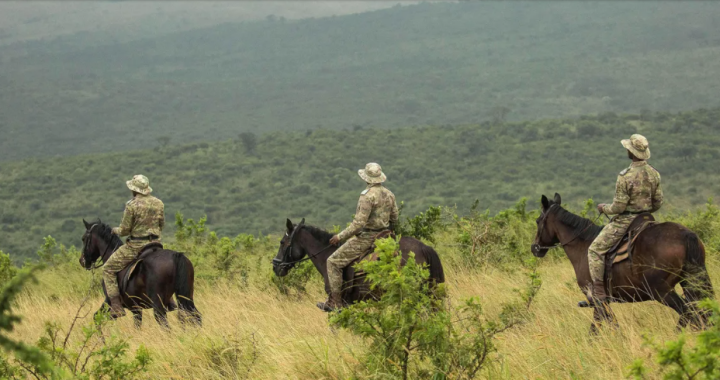


All Rise wins Mail and Guardian “Greening the Future” award.

All Rise is honoured to the receive the Mail and Guardian “Greening the Future” award in the mining category.
Thank you for this recognition.


August Newsletter: The Start Of Women’s Month Brings Good News!

Kirsten Youens was awarded third place in the category of outstanding human rights activist, social justice activist, and pro bono woman lawyer at the Woza Africa Awards recently.
WOZA AWARDS are annually presented to women lawyers in Africa in recognition of their outstanding dedication, achievements and contribution to the profession, whether it be services, legal education, human rights or the pro bono sector.
More good news is the rallying of the social justice sector in support of ALL RISE against spurious attacks made against us by the respondents in the Tendele review case. In an extraordinary show of public solidarity, 38 civil society organisations supported a call on the National Union of Mineworkers, Mpukunyoni Traditional Authority, Mpukunyoni Community Mining Forum, and the Association of Mineworkers and Construction Union and their representative attorney, Dennis Sibuyi, to:
– Respect the 4 May Pretoria High Court ruling that Tendele Coal Mining’s 2013 application for a mining right (to expand its Somkhele operations) failed to comply with the law and that the decision of officials in the Dept. of Minerals and Energy to award that right was invalid;
– Respect the right of the Mpukunyoni people to assert their constitutional rights without fear of reprisal; and
– Respect the right of ALL RISE to act without fear of harassment, intimidation and defamation.
The 38 organisations’ letter follows a 17 May 2022 statement titled “Mpukunyoni Community calls on All Rise and their funders to account to the community for their efforts to close Tendele Mine”, which attacks All Rise, demanding to know the source of its funding, accusing it of wanting to close the mine and stating that All Rise’s actions are “tantamount to a gross human rights violation”.
All Rise is genuinely humbled by the support and thanks every single organisation that signed this letter. An attack on one is an attack on all.
In more sombre news, the applications for coal mining or prospecting around the Hluhluwe-iMfolozi Park are increasing. These include:
- Prospecting activities proposed by Imvukuzane in the Fuleni Reserve.
- The current and future mining operations of ZAC located northwest and west of Imvukuzane’s proposed prospecting area, and which fall in the five traditional authority areas of Zungu, Matheni, Mlaba, Mandlakazi and Ximba; the iMfolozi catchment; and on the northern and western boundaries of the Hluhluwe-iMfolozi Park.
- The current and future Somkhele mining operations of Tendele Coal Mining (Pty) Ltd in the Mpukunyoni Traditional Authority area and the iMfolozi and other catchments; and on the eastern boundary of the Hluhluwe-iMfolozi Park, and immediately north of the Imvukuzane prospecting area.
- The other current prospecting applications by Yengo Resources (Pty) Ltd) in the Ximba Traditional Authority area on the southwestern boundaries of the Hluhluwe-iMfolozi Park; by Tendele Coal Mining (Pty) Ltd in the Mpukunyoni Traditional authority on the eastern boundaries of the Hluhluwe-iMfolozi Park and by Raycom Resources Pty Ltd, southwest of the Imvukuzane prosecting area and the Hluhluwe-iMfolozi Park.
- The previous prospecting activities already conducted by ZAC in the same area that Yengo is now proposing to prospect; by Ibutho Legacy (Pty) Ltd in the same prospecting area that Imvukuzane is now proposing to prospect; and by Tendele in the same area for which it is again applying for a prospecting right.
- The mining rights held by Mbila Resources (Pty) Ltd for the Msebe Opencast Anthracite Mine and Mbila Underground Mine both east of Nongoma, also in the Zululand District Municipal area.
The communities who live in these areas are our clients as members of the community organisation we represent, MCEJO. Currently, we are working with the Fuleni community, representing them and other organisations in opposing the prospecting application over their land.
We continue to represent the Somkhele MCEJO community in many aspects. As Tendele has begun a new Scoping and EIA process (as per the requirements of the May judgment) in the three villages it plans to mine, one of our key focus areas is assisting our community and NPO clients in participating in this process. There is also an appeal against the granting of Tendele’s water use licence waiting for a hearing with the Water Tribunal.
Yet another unfortunate decision by government on 8 July 2022 was the rejection of several appeals to the Environmental Authorisation allowing for the clearing of 8000 hectares of indigenous bush for the Musina-Makhado Special Economic Zone ‘mega city’ project in Limpopo. The rejection of the appeals, collated by a loose coalition of social movements and interested and affected parties, including those involved with activist research and support for people in Limpopo, has been met with the coalition’s profound disillusionment as to the agency’s endorsement of the flawed EIA process. All Rise submitted an appeal in collaboration with CALS that detailed the flaws of the EIA process and the project as a whole. We are now discussing collaborating with the coalition to take this decision on review.
Ending on a good note, All Rise continues to provide workshops to communities on the EIA regulations and how to meaningfully participate in the EIA processes. In the next month or two, we are also rolling out some workshops on climate justice and look forward to sharing that with you.
During Women’s Month, we will introduce you to each member of our amazing all-women board of directors, so keep an eye on our social media platforms.
We wish you a happy August!
Kirsten, Janice and Lihle
**As a non-profit clinic, we need funding to do our work. If you would like to support us, we would be very grateful! Head to this link to donate: https://allrise.org.za/donations/

Kirsten Youens awarded third place at WOZA Awards

We are very proud to announce that Kirsten Youens was awarded third place in the category of outstanding human rights activist, social justice activist, pro bono woman lawyer at the Woza Awards.
WOZA AWARDS are annually presented to women lawyers in Africa in recognition of their outstanding
dedication, achievements and contribution to the profession, whether it services, legal
education, human rights or the pro bono sector.
Non-Executive Director Mawande Mazibuko accepted the award on Kirsten’s behalf. “When one is given the opportunity to work in an environment where your work primarily concerns speaking up for those who cannot speak for themselves; the crushed, the oppressed, those orphaned and widowed due circumstances of injustice, it requires you to be selfless and unrelenting in your pursuit for justice.
Kirsten Youens is a legal practitioner who has displayed such selflessness in the face of significant and dangerous opposition.
The All Rise Law Clinic Board would like to congratulate Kirsten on this prestigious recognition and award and also thank her for continuing to pursue environmental and climate justice for the communities she serves.”

Coal mining onslaught threatens the Hluhluwe-iMfolozi Park on an unprecedented level

The southern white rhino has been to the brink of extinction and back, but even as it continues to be under threat from poachers, its survival is largely thanks to the conservation work of one park. Today, most of these rhinos can trace their ancestry back to the Hluhluwe-iMfolozi Park (HiP) in KwaZulu-Natal, South Africa,” CNN reported in June 2020.
It was Ian Player and his mentor, Magqubu Ntombela, a game ranger and descendant of the great Zulu chiefs, Shaka and Dingaan, who set up wilderness trails in the iMfolozi and sparked a global wilderness consciousness movement.
As Player wrote, “everyone who comes to the wilderness is changed by it, no one who sleeps on the ground underneath the blaze of southern stars and hears the roar of the lion, the coughing of the leopard, the howl of the hyena, the scream of the elephant and smells the smoke of wild wood burning is ever the same again.”
And in what must be recognised as one of the greatest conservation achievements of all time, Ian Player’s “Operation Rhino” achieved a 1,000% growth in the white rhino population in the 1960s saving the 40 Southern White Rhino left in the 1940s from extinction. Operation Rhino took place in the Hluhluwe-iMfolozi Park which is also the oldest proclaimed game reserve in Africa, having been established in 1895.
The Park sits on a coal belt and has, for over two decades, been subjected to the difficulties of having two coal mines as its neighbours on both its north and east boundary. Coal mining is polluting, noisy and not a good neighbour for the communities they inflict their pollution on nor the wild areas where animals and people live peacefully and, (gasp) even thrive. It seems utterly bizarre that coal mining would be given a place adjacent to ancient wild heritage and centuries-old Zulu culture — but that’s exactly what happened.
And continues to happen. The situation as it stands today is that there are three prospecting applications — for coal mining on the western and southern borders of the Hluhluwe-iMfolozi Game Reserve respectively — and two coal mine expansion applications (for coal on the western and eastern borders of the Hluhluwe-iMfolozi Game Reserve respectively) as well as several in the near vicinity.
One of the main causes of the climate crisis is the fossil fuel industry which, particularly in South Africa, is still being pursued in spite of the damage it causes to the environment and at grassroots level in the communities in which the mining takes place.
Coal mining repeatedly forecloses on alternative, more sustainable land uses; undermines biodiversity conservation efforts; impacts heavily on water resources; strips people of their land rights; destroys subsistence-based livelihoods and cultural heritage; causes division in the community; and erodes people’s right to an environment that is not harmful to their health or wellbeing — a right afforded to them by Section 24 of the Constitution, 1996.
Freshwater ecosystems, including rivers and wetlands, are particularly vulnerable to coal mining and related activities that can often result in irreversible damage or longer-term gradual, cumulative impacts. Coal mining will result in significantly reduced water quality due to acidification and ferric sulphate (which kills fish and other aquatic fauna), hydrocarbons, coal dust and nitrate deposition, together with high turbidity.
South Africa has 22 water source areas which are the source of our five major river systems and which support approximately 60% of South Africa’s population. The Mfolozi Headwaters is one of these areas with the Black Mfolozi, Pongola and Lenjane Rivers being the main rivers which flow from Mfolozi Headwaters. It feeds a number of free-flowing rivers including the Mkuze, Nsonge, Ndonweni, Ngogo, Mfule and Nyalazi.
Three Ramsar Sites: Kosi Bay, Lake Sibaya and St Lucia system fall within this water source area.
The Mnyaba and Nyalazi river systems are classified as nationally important Freshwater Ecosystem Priority Areas (Fepas), the Mnyaba river has a “medium-high” Ecological Importance and Sensitivity (EIS) rating and Nyalazi River has been rated medium in terms of EIS. The White Mfolozi is identified as being a strategic spatial priority for conserving South Africa’s freshwater ecosystems and supporting sustainable water resources.
The St Lucia Estuary is one of the main components of the iSimangaliso Wetland Park, a Unesco World Heritage Site. The estuary is by nature dynamic. It is driven, at any given point in time, by five rivers and sea water inflows through an estuarine mouth. Of the rivers, the Mfolozi is the largest. The wetland park supports a range of plant, bird, fish, and animal species.
All of these mines and prospecting applications fall within the Mfolozi Catchment or are situated along the Mfolozi River. The Black Mfolozi flows through ZACs mining right area and into the Hluhluwe-iMfolozi Park. A drainage line flows through Zululand Anthracite Colliery’s (ZAC) Nqolothi coal siding (which stockpiles coal for transport) and into the Nhlungwane stream, which is a tributary of the Mfolozi River. ZAC abstracts water from the Black Mfolozi River in an amount we are unable to ascertain but the annual water requirement for its proposed expansion is 190,453.69m3 per annum.
According to Tendele’s water licence (which we have appealed to the Water Tribunal) it abstracts up to 750,000m3 per annum from the Mfolozi River and abstracts (by way of dewatering) 2.5-million m3 per annum from the ground.
According to South Africa’s National Climate Change Adaptation Strategy, 2019 (approved in August 2020), access to fresh water, which is already a major challenge in these areas, is predicted to become a much bigger problem as the climate crisis intensifies, with potentially devastating effects. South Africa is to experience drier conditions overall with higher water demand and deteriorating water quality in river systems, water storage reservoirs and groundwater. Our current water usage already exceeds reliable yield.
In most climate-crisis scenarios projected for South Africa, future water supply availability will worsen considerably by 2050. Decreased availability of water in rivers is a result of the net effect of increased temperatures and increased evaporation, combined with shifts in the timing and amount of rainfall; changes in the timing of high and low flows due to changes in rainfall patterns; and a higher incidence of floods as heavy rainfall events increase.
According to the Adaptation Strategy, in the event of future water shortages, meeting the reserve (i.e. water quality and quantity needed to satisfy basic human needs and protect aquatic ecosystems to ensure ecologically sustainable development) must take priority over water uses in the mining sector. If basic human and environmental needs are not given precedence, as required, this could have significant impacts for environmental and human health — resulting in breaches of fundamental constitutional rights to a healthy environment and the right of access to sufficient food and water.
Essentially, what is happening in northern KwaZulu-Natal, in a Freshwater Ecosystem Priority Area, is a war on water and our climate resilience.
To have any more mining and prospecting rights issued on top of all the current mining is evidence that the Department of Mineral Resources and Energy (DMRE) has absolutely no intention of protecting the natural areas of the country or meeting our climate commitments. What DMRE is doing is showing complete disregard for any other department in government and for the people of South Africa.
If not for community organisations and civil society opposing these many applications, there is no doubt that DMRE would just grant all the applications that come its way. With environmental authorisations also being issued by DMRE, both the environmental authorisation and the mining right are granted without issue or delay.
Unless they are opposed by us, the people.
Let’s be honest. No one wants to drive through the wasteland of filth that is an open-cast coal mine before entering a game reserve. No one wants to spend time in a wilderness area when the light and noise pollution from a mine ruins the experience. No one and no animal wants to drink water from a river that is polluted by mine waste. No person would choose to live next to a mine and be exposed to dust, noise and pollution every day.
While the world moves away from coal, South Africa welcomes more and more. What DMRE is doing by issuing mining licences in this area is nothing short of ecocide.
This article was published in the Daily Maverick on 30 June 2022.

STOPPING SHELL: IT’S A WIN FOR COMMUNITIES AND THE ENVIRONMENT!
In a well-received judgement handed down on 28 December 2021 by Judge Bloem, Shell was ordered to immediately cease its seismic survey along the Wild Coast of South Africa. The urgent interdict was granted pending the hearing of an application for Shell to be interdicted from conducting its surveys until it has obtained an environmental authorisation in terms of the National Environmental Management Act (NEMA). The Court ordered Shell and the Minister of Mineral Resources and Energy to pay the costs of the application for the interim interdict.
All Rise Attorneys for Climate and Environmental Justice along with Sustaining the Wild Coast (SWC), the Dwesa-Cwebe Communal Property, Ntsindiso Nongcavu, Sazise Maxwell Pekayo, Mashona Wetu Dlamini and Cameron Thorpe lodged the urgent application against Shell’s seismic survey off the Wild Coast in December 2021. We were represented by Legal Resources Centre and Richard Spoor Inc.
The two main issues were that firstly, Shell had not secured environmental authorisation under NEMA but relied on an Environmental Management Programme that was submitted and approved as part of an application for an exploration right to use seismic surveys to seek out oil and gas reserves in terms of section 79 of the Mineral Petroleum Resources Development Act (MPRDA) and secondly, Shell had failed to consult with communities and individuals in the process of applying for its exploration right.
At the hearing, Advocate Tembeka Ngcukaitobi, senior counsel for the applicants, argued that the court cannot endorse a farcical consultation process. He described the matter as being about the significance of consultation; that consultation would have unlocked insight into community lives. He said “If you don’t consult with people, it is as if you don’t see them. You treat them as if they don’t exist.”
In his judgement, Bloem J confirmed that Shell had a duty to meaningfully consult with the communities and individuals. Shell had failed to consult with the applicant communities who hold customary rights, including fishing rights. He acknowledged that the applicant communities also hold a special spiritual and cultural connection to the ocean and it was therefore crucial for Shell to consult them to understand how the survey would impact them.
Bloem J held that “Shell should not be allowed to use the consequences of its own failure to adequately consult with all the interested and affected persons as a ground for why an interim interdict should not be granted against it. Constitutional rights are at stake. The financial loss that Shell and Impact Africa are likely to suffer cannot be weighed against the infringement of the Constitutional rights in question. The breach of those constitutional rights threaten the livelihoods and well-being of the applicant communities as well as their cultural practices and spiritual beliefs. Where constitutional rights are in issue, the balance of convenience favours the protection of those rights.”
The Court found that the exploration right, which was awarded on the basis of a substantially flawed consultation process, was unlawful and invalid. The applicants’ right to meaningful consultation constituted a prima facie right which deserved to be protected by way of an interim interdict.
Judge Bloem did not make an order regarding the lack of environmental authorisation but he did find that: “Whether or not Shell requires an environmental authorisation obtained under NEMA is a difficult legal issue. The Minister caused an affidavit to be delivered wherein he adopted the stance that “the environmental management programme used to support the application made by [Impact Africa] for the renewal of its exploration right …… constitutes an environmental authorisation, as envisaged by the National Environmental Management Act 107 of 1998 (NEMA)”. Whether this is so, however, is a decision to be made by the court. Although I am of the view that the applicants have prospects of success in that regard, it is a matter that should rather be considered by the court”.
Bloem J devoted much of his judgment to setting out the harm that the seismic survey will have on marine life and concluded by stating that the applicants had established a reasonable apprehension of irreparable harm.
ALL RISE is extremely gratified that the Court acknowledged the need to involve communities in decisions affecting them; to understand and accept cultural and spiritual practices; and to acknowledge the importance of protecting our marine environment. It is a progressive judgement that will be referred to and cited for many years to come.

Unfortunate Environmental Authorisation Precedent Stands as Application to the Constitutional Court Dismissed

Unfortunate Environmental Authorisation Precedent Stands in the matter between the Global Environmental Trust & MCJEJO v Tendele Coal Mining (Pty) Ltd and Others as Application to the Constitutional Court Dismissed
On 11 January 2022 the long awaited decision by the Constitutional Court regarding our application for leave to appeal filed in April 2021 was received. Disappointingly, it was dismissed which means that this important legal issue will not be argued in South Africa’s highest court.
The background to this matter between our clients (the Global Environmental Trust and the Mfolozi Community Environmental Justice Organisation) and Tendele Coal Mining (Pty) Ltd revolved around the interpretation of the Mineral and Petroleum Resources Development Act 28 of 2002 (MPRDA) and the National Environmental Management Act 107 of 1998 (NEMA) before the “One Environmental System” came into force on 8 December 2014. In short, the issue was whether the environmental impact of mining operations was exclusively dealt with under the MPRDA through approval of the Environmental Management Programme (EMP), or whether an environmental authorisation issued under NEMA was also required before mining operations could commence.
Tendele has neither applied for nor been granted environmental authorisation under NEMA for its open cast coal mine in northern KwaZulu-Natal, but held the view that its EMPs prepared and approved in terms of the MPRDA were sufficient. Our clients demanded Tendele seek an environmental authorisation under the NEMA. Tendele’s argument was that no environmental authorisation was required for mining rights sought before December 2014.
We applied for an interim interdict to stop Tendele from mining until it obtained environmental authorisation. The Pietermaritzburg High Court sided with Tendele. After criticising the applicants’ pleadings, the court found that mining rights sought before December 2014 do not require environmental authorisation. According to the High Court, the MPRDA covered all environmental impacts of mining and NEMA had no role even with regard to the ancillary activities related to mining that were listed in the NEMA Environmental Impact Assessment regulations. The High Court also ordered costs against the applicants with no reference to the principles of Biowatch (ie. persons should not be deterred from enforcing their rights in fear that they will have to pay their opponent’s costs if they do not succeed). This principle arose from the Constitutional Court case of Biowatch Trust v Registrar Genetic Resources and Others.
Given that a judgment stands until either rescinded or set aside by a court of appeal, our clients appealed this judgment to the Supreme Court of Appeals (SCA).
The majority judgment handed down by the Supreme Court of Appeal dismissed the appeal on the basis of its pleadings. It criticised the applicants for not enumerating which specific listed activities Tendele undertook that obliged it to seek an environmental authorisation under NEMA. The majority judgment however did not address the legal issue of the requirement for environmental authorisation under NEMA nor the issue of the costs order.
However, one of the judges, Schippers JA, was not persuaded by Tendele’s “quibbles” about our pleadings in his dissenting judgment. He called them ‘opportunistic and contrived’. Schippers JA accepted our argument that there was no genuine dispute over whether Tendele is conducting listed activities. Tendele is mining ‘one of the largest resources of open-pit mineable anthracite reserves in South Africa’ and it therefore must be conducting listed activities. Also, Tendele never denied that its ‘mining operations triggered any listed activity.’
Schippers JA’ dissenting judgment would have interdicted Tendele from mining without an environmental authorisation and ordered Tendele to pay costs. Boosted by this dissenting judgment, in April 2021 we sought the Constitutional Court’s leave to appeal the majority judgment of the Supreme Court of Appeal.
On 11 January 2022 we received notice that the Constitutional Court had dismissed our application. Therefore, the law right now is as pronounced by the High Court – that environmental authorisation is not required where a mining right was applied for before December 2014. The precedent of the High Court’s costs order against the community organisation and the chilling effect it has on constitutional litigation against mining companies, also still stands.
The law around environmental authorisations for activities related to mining prior to December 2014, therefore remains murky.
In the Mabola Case, the Court was faced with an application to review and set aside a decision to permit coal mining activities in a protected wetlands area. Judge Davis held that the party seeking to conduct such mining activities would be required to obtain five different authorisations, including the approval of its EMP in terms of section 39 of the MPRDA and environmental authorisation for listed activities in terms of section 24 of NEMA.
The Court in the Mineral Sands Resources case adopted the same view, albeit obiter, with Judge Rogers finding that prior to 8 December 2014 the decision to approve an applicant’s mining EMP and to grant the mining licence effectively constituted the environmental authorisation to conduct the mining activity but at the same time, the applicant would also have needed to obtain a NEMA environmental authorisation.
Recently, in case of Sustaining the Wild Coast NPC and Others against Shell’s seismic survey being undertaken on the Wild Coast, in which ALL RISE, NPC was an applicant, Judge Bloem held in his judgment:
Whether or not Shell requires an environmental authorisation obtained under NEMA is a difficult legal issue. The Minister caused an affidavit to be delivered wherein he adopted the stance that “the environmental management programme used to support the application made by [Impact Africa} for the renewal of its exploration right…constitutes an environmental authorisation, as envisaged by the National Environmental Management Act 107 of 1998 (NEMA)”. Whether this is so, however, is a decision to be made by the court. Although I am of the view that the applicants have prospects of success in that regard, it is a matter that should rather be considered by the court which will determine the relief south under Part B of the notice of motion.
Thus, it is unfortunate that in our Global Environmental Trust matter the majority of the SCA did not deal with the environmental authorisation issues. However, as mentioned above, Schippers JA dealt squarely with the fact that a separate environmental authorisation under the NEMA was required:
It is clear, simply from the above provisions of NEMA, that an environmental authorisation granted by a competent authority under NEMA is not the same thing as an EM approved under the MPRDA. In Minister of Mineral Resources v Stern (to which we were not referred), this court assumed, without deciding, that an environmental authorisation under NEMA is essentially the same as an EMP. In my view, it is not. An environmental authorisation is required for the commencement of an activity identified in a listing notice. The impacts of listed activities on the environment are assessed in order ‘to give effect to the general objectives of integrated environmental management’ in Chapter 5 of NEMA, which lays down rigorous processes for that assessment.
We agree that it is clear. Section 5A of the MPRDA provides that no person may prospect for or remove, mine, conduct technical co-operation operations, reconnaissance operations, explore for and produce any mineral or petroleum or commence with any work incidental thereto on any area without an environmental authorisation. Section 24F of NEMA prohibits the commencement of any listed activity without an environmental authorisation. What were two parallel processes prior to 2014 – one being the environmental authorisation process under NEMA and the other being the EMPr under the MPRDA – became ONE process with the introduction of what is aptly referred to as the One Environmental Management System on 8 December 2014. Conducting mining activities authorised prior to 8 December 2014 in the absence of an environmental authorisation issued in terms of section 24 of NEMA are unlawful. Unfortunately, the Constitutional Court will not be deciding the issue and legal certainty is still needed.
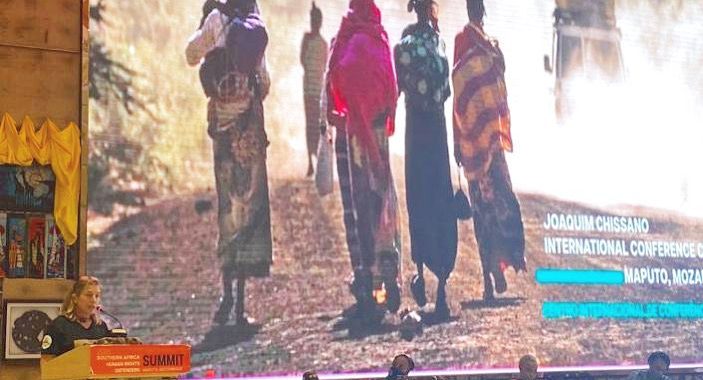
Kirsten Youens speaks at Southern Africa Human Rights Defenders Summit in Mozambique
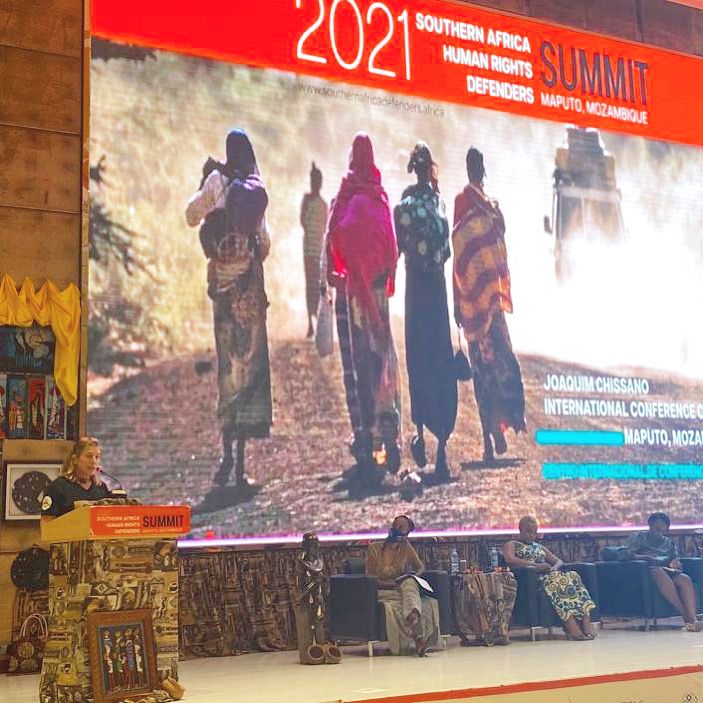
Kirsten Youens, Chief Executive Director of ALL RISE was invited to attend the Southern Africa Human Rights Defenders Summit in Mozambique last week to share her experience as an environmental defender and as a lawyer defending those who are in need of environmental justice.
She addressed important issues such as government being held accountable for its failure to defend the defenders, and upholding the Constitutional rights of it’s citizens. Kirsten spoke on environmental justice in a side session and woman defenders in the plenary session. Thank you to SAHRDN for the invitation
Defending the Defenders Webinar – 22 October 2021
Friday, the 22nd October 2021, is one year after environmental defender, Fikile Ntshangase was murdered in her home. Watch this webinar with Kirsten Youens, Arnold Tsunga, Mary de Haas, Louis Wilson, Mary Lawlor and Rowan Williams as they discuss local and global issues and how to defend the defenders. Facilitated by Simphiwe Sidu.
This Webinar was hosted by All Rise and Global Witness.

Law clinic launched for climate and environmental justice

From left: Lihle Mbokazi, Liaison Manager; Janice Tooley, Executive Director and Attorney; Kirsten Youens, Chief Executive Director and Attorney.
To our valued network,
You are receiving this newsletter because you have been a supporter of our work over the years and we are excited to share our new developments with you.
As many of you know, our pro bono work began years ago in northern KwaZulu-Natal (KZN). Being witness to the injustices in northern KZN was the turning point for us, and where our law careers became our passion. We realised the positive impact we could have on thousands of people who don’t have access to the information or legal support they need to advocate for their own rights. And that we could play the role of educator, rights defender and ally. Combining our environmental and human rights activism with the law has made us even more committed to our profession. Ultimately, this led to the establishment of ALL RISE.
ALL RISE, a non-profit organisation and registered law clinic for climate and environmental justice has launched in KZN, becoming the only pro bono attorneys in the province working exclusively in the environmental field. It is one of a few in the country assisting communities and organisations assert their Constitutional right to an environment that is not harmful to their health or well-being.
Our all-woman legal team consists of passionate and experienced attorneys who represent those who cannot afford legal services. ALL RISE takes on other matters of public interest, offering legal advice on a range of environmental and climate change issues; litigating when necessary; and providing representation in environmental impact assessment (EIA) processes and administrative appeals. The team provides community support and training as well as advocacy for wildlife and the environment which currently have no independent legal status.
ALL RISE has identified a number of challenges that it seeks to rectify through the newly formed law clinic:
- Lack of access to the legal system to enforce environmental rights and very few pro bono attorneys to do the necessary work.
- People not knowing and understanding their rights and the processes through which they are entitled to express their views and exercise such rights.
- Environmental issues not being given the same weight and attention as other issues.
- Government not having the capacity or the will to adequately protect the environment and people’s rights, especially those who are vulnerable and disadvantaged.
- The urgency of addressing climate change.
South Africa has one of the best Constitutions in the world. Our Bill of Rights encompasses fundamental rights to life and equality; to food, water and housing; and to an environment that is not harmful to one’s health or well-being. The challenge lies in enforcing these rights. Rights on paper are not enough. Without lawyers acting pro bono and generous funders who can cover the high costs of litigation and client engagement, it is impossible to put these rights, so eloquently set out in the Constitution, into effect.
Our dynamic team has made significant impact in environmental law issues over the last few years that have gained national and international attention, particularly in the fossil fuel, wildlife and marine space.
Most of our energies so far have been directed towards a number of coal mines in Northern KZN which adversely impact rural communities, the iconic Hluhluwe-iMfolozi Park, and the Mfolozi and Nyalazi river catchments which feed into the southern part of the iSimangaliso Wetland Park World Heritage Site and the St Lucia System Ramsar Site.
Of these mines, the most intensive matters to date have been the two High Court challenges brought against Tendele and its Somkhele open cast coal mine. This has been done on behalf the Mfolozi Community Environmental Justice Organisation (MCEJO) comprising over 3,000 members, as well as the Global Environmental Trust (GET), ActionAid South Africa, Mining Affected Communities United in Action (MACUA), and the Southern African Human Rights Defenders Network, all of which have a long association with MCEJO and supporting its members in their fight against the environmental and social injustices.
Undeterred after losing in the lower courts, the first case is being taken to the Constitutional Court on appeal and is currently awaiting a hearing. The second case, which is a review application challenging Tendele’s 2016 mining right, will be heard in the Pretoria High Court on 6 and 7 October.
The ALL RISE team and especially its clients face ongoing challenges both in and outside of the courtroom, including threats and acts of violence. Tragically, one of MCEJO’s long-standing members was murdered in October 2020 for being very vocal in her opposition to the mine. Other members have been shot at and assaulted and many more are constantly under threat for exercising their rights.
ALL RISE sees the safety and well-being of clients as a crucial and unique service we provide. Lihle Mbokazi is ALL RISE’s Liaison Manager who together with psychologist, Sheila Berry, organises community meetings, training, provides trauma counselling and facilitates access to security measures offered by partner organisations.
ALL RISE aims to combat climate change and promote environmental justice to protect people, wild species and the planet; to empower people to understand and enforce their Constitutional Rights; and to advance law and practice by promoting best and better practice in EIAs, public participation and decision-making.
It has taken many years of hard work to get to this point and we could not have done it without support from other lawyers, organisations and individuals – far too many to mention them all here by name. Public interest law and social justice is a collaborative effort and our work is a good example of just how important that is.
Thank you for all the support we have received so far. We will continue to fight on behalf of those who can’t. And we will bring about the changes that we envision. Both for people and for the planet. We look forward to working together to make the world a better place.
Regards,